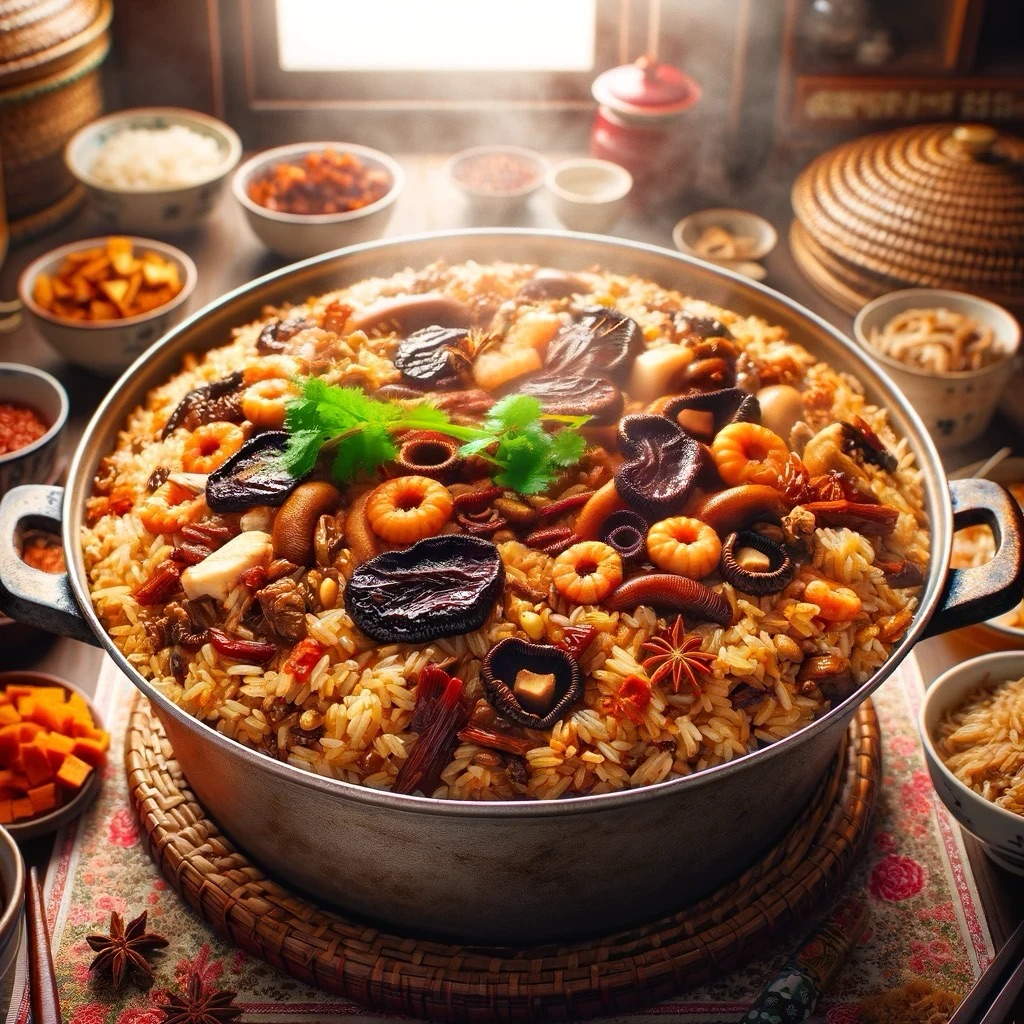










Oil rice is a dish that includes a variety of ingredients. Dried squid can be bought for 400 NT dollars for two at the dried goods store on the left side of Pingtung's Central Market (a short walk away). For the meat, pork collar butt is tender and fatty, making it a perfect match. It’s a tip shared by a mountain hiking friend for convenient cooking. Pork collar butt looks good, with a firm texture and a bit of marbling. Sakura shrimp from Donggang, gifted by a friend, is particularly fragrant and fresh, just right for this dish. The dried shiitake mushrooms were a gift, costing 800 NT dollars for a thick pack from Taiwan. The shallots are homemade, sliced and fried in lard, taking care not to burn them, a technique taught by a customer and I want to try.
A friend made the dried radish, drying Hengchun radishes and sprinkling them with salt. The first step is to slice and fry the shallots in lard until fragrant, then remove them. Next, stir-fry the pork until slightly dry, then remove it. The shiitake mushrooms need to be soaked for half an hour, then sliced and wrung dry after saoking. Next, stir-fry the shiitake mushrooms until dry and set them aside. Quickly stir-fry the squid and sakura shrimp and set them aside. Once all the ingredients are ready, stir-fry everything together, adding salty soy sauce and sugar to finish.
To prevent flatulence, prepare three cups of sticky rice and one cup of regular rice. Use a ratio of three cups of sticky rice to two cups of water, but this time add three and a third cups of water. Once the rice is cooked, mix in the prepared ingredients, then place everything into the rice cooker, adding water to the outer pot.
This dish reminds me of joyful occasions like having a baby, when oil rice is cooked to share the happiness. It’s a delightful and auspicious dish. After being taught by a friend and experimenting a bit, I’ve learned to make it well.
-
《島嶼未來料理教室》Future Formosa Culinary Lab Profile Nr.070
“跟家人吃的”
時空旅行者 / 女性 / 國籍臺灣 / 生活於屏東
印象中品嚐過的第一道料理是扁魚白菜羹:國中時在姨婆家第一次品嚐,是姨婆做的正式菜。這道菜用康寧鍋盛出,有扁魚香氣、香菜香氣和微微的醋味,是過年時和家人一起吃的。這道菜的典故持續影響著她,過年要有餘,芹菜象徵勤儉。小時候,長輩會在吃這些菜時講解其中的吉祥寓意。
"Eating with Family"
Time Traveler / Female / Taiwanese / Living in Pingtung
Her first memorable dish was dried fish and cabbage stew. She first tasted it in middle school at her great-aunt's house. Served in a CorningWare pot, it had the aroma of dried fish, cilantro, and a hint of vinegar. It was enjoyed with family during the Lunar New Year. The dish's traditional meanings, like abundance and frugality, have continued to influence her.
-
國立臺灣歷史博物館的第 1 個「公共飲食記憶 NFT 化」實驗計畫《超時空島嶼餐桌》
National Museum of Taiwan History's First NFT Experimental Project on Public Dining Memories《Time-Space Dining Tables》
「國立臺灣歷史博物館」為推動國家文化記憶庫之永續發展,融入當代議題、常民生活及在地關懷,連結博物館專業、數位創新思維與多元社群行動,以促進臺灣原生文化之活化運用,鼓勵全民共同開展記憶庫多元主題與主題素材近用。
本計畫案於112年推出《島嶼庫客 Islands Cooker》飲食記憶系列7支影片,探究臺灣飲食的歷史成因,113年延續「餐桌」的概念,加入「未來」元素,委由畸零地創造股份有限公司辦理《島嶼未來料理教室——NFT設計工作坊》,以記憶庫長期深耕之飲食記憶主題,透過非同質化代幣(Non-Fungible Token,以下簡稱 NFT)設計工作坊,增進記憶庫之內容與應用,落實臺灣原生文化之推廣。
《島嶼未來料理教室——NFT設計工作坊》以「推測設計」為核心,反思記憶料理的獨特性,其之於 NFT的當代意義及其飲食文化價值,並將工作坊延伸設計為「發掘身體飲食記憶,運用想像和推測來創造未來島嶼飲食文化」的參與式體驗活動。工作坊由編舞家與引導師,透過一連串的帶領、想像和對話,挖掘及連結蘊藏身體感知中的飲食記憶,並讓參與者書寫飲食記憶;接著由畸零地工作室與生成式AI 「ChatGPT 4o」協作製作出 「記憶食譜 NFT」及文字翻譯;最後線上場以「圍爐」的概念,讓參與者在雲端上互相分享與交流。
這些飲食記憶透過NFT不可替代、數位交換的特性,被永久保存並流傳,期望每個人都能回首屬於自己的飲食記憶和歷史,經由公共化的途徑與媒介,成為社會記憶的一部份,構築社群認同的可能。
To promote the sustainable development of the Taiwan Cultural Memory Bank, the National Museum of Taiwan History integrates contemporary issues, ordinary life, and local concerns. By combining museum expertise, digital innovation, and diverse community actions, it aims to revitalize and utilize Taiwan's indigenous culture. The museum encourages the public to collaboratively develop and access various themes and materials within the memory bank.
This project launched the "Islands Cooker" series of seven videos on culinary memories in 2023, exploring the historical origins of Taiwanese cuisine. Continuing with the concept of the "dining table" and incorporating "future" elements in 2024, the project entrusted Ground Zero Co., Ltd. to handle the "Islands Future Cuisine Classroom—NFT Design Workshop." By delving into the long-term themes of culinary memories from the Taiwan Cultural Memory Bank and utilizing the Non-Fungible Token (NFT) design workshop, the project aims to enhance the content and application of the memory bank, promoting the dissemination of Taiwan's indigenous culture.
The "Islands Future Cuisine Classroom—NFT Design Workshop" centers on "speculative design," reflecting on the uniqueness of memory cuisine and its contemporary significance and culinary cultural value in relation to NFTs. The workshop is extended into a participatory experiential activity, designed as "discovering culinary memories in body and using imagination and speculation to create future island culinary culture." The workshop, led by choreographers and facilitators, guides participants through a series of activities, including imagination and dialogue, to uncover and connect with culinary memories embedded in their bodily perceptions. Participants then write down their culinary memories. Next, Ground Zero Co., Ltd. collaborates with the generative AI "ChatGPT 4o" to create "Memory Recipe NFTs" and translate the texts. Finally, the online session, based on the concept of "reunion dinner," allows participants to share and exchange their experiences and creations in the cloud.
These culinary memories, preserved and circulated through the non-fungible and digital exchange characteristics of NFTs, are expected to be permanently stored and shared. The goal is for everyone to reflect on their own culinary memories and histories, making them part of societal memory through public pathways and media, thereby fostering a sense of community identity.
※本圖像為AI生成內容
※This image is AI-generated content.