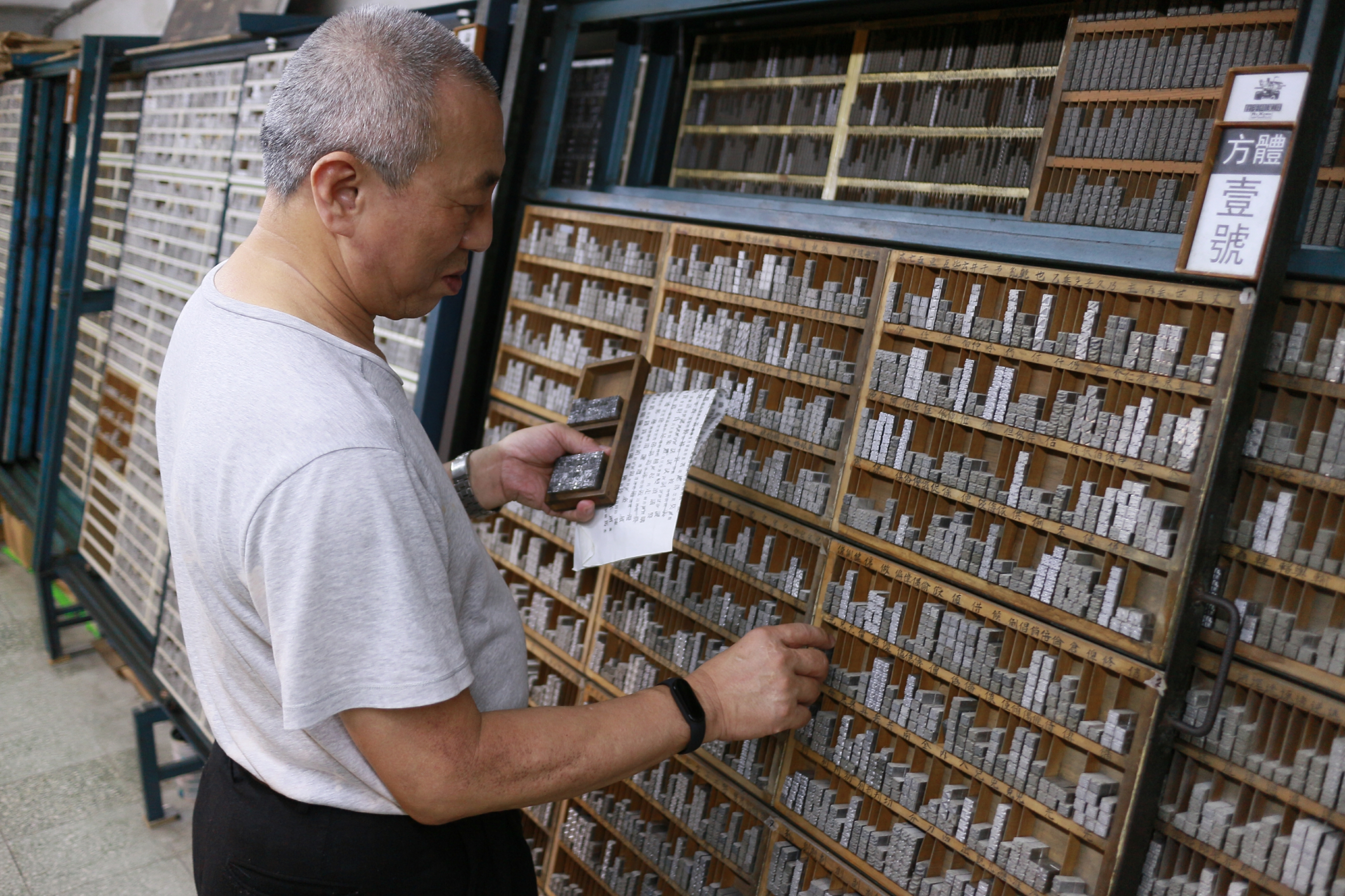

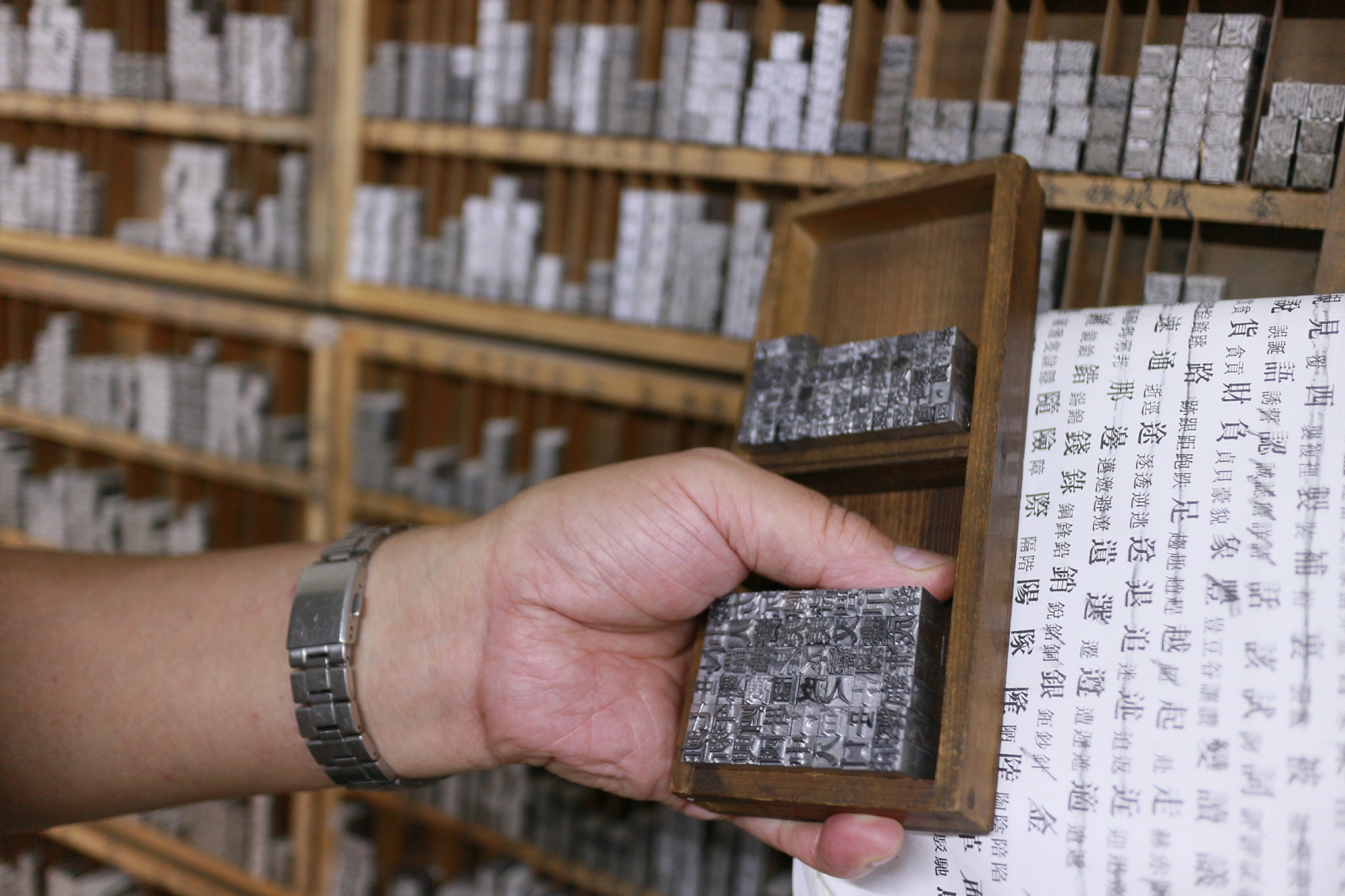
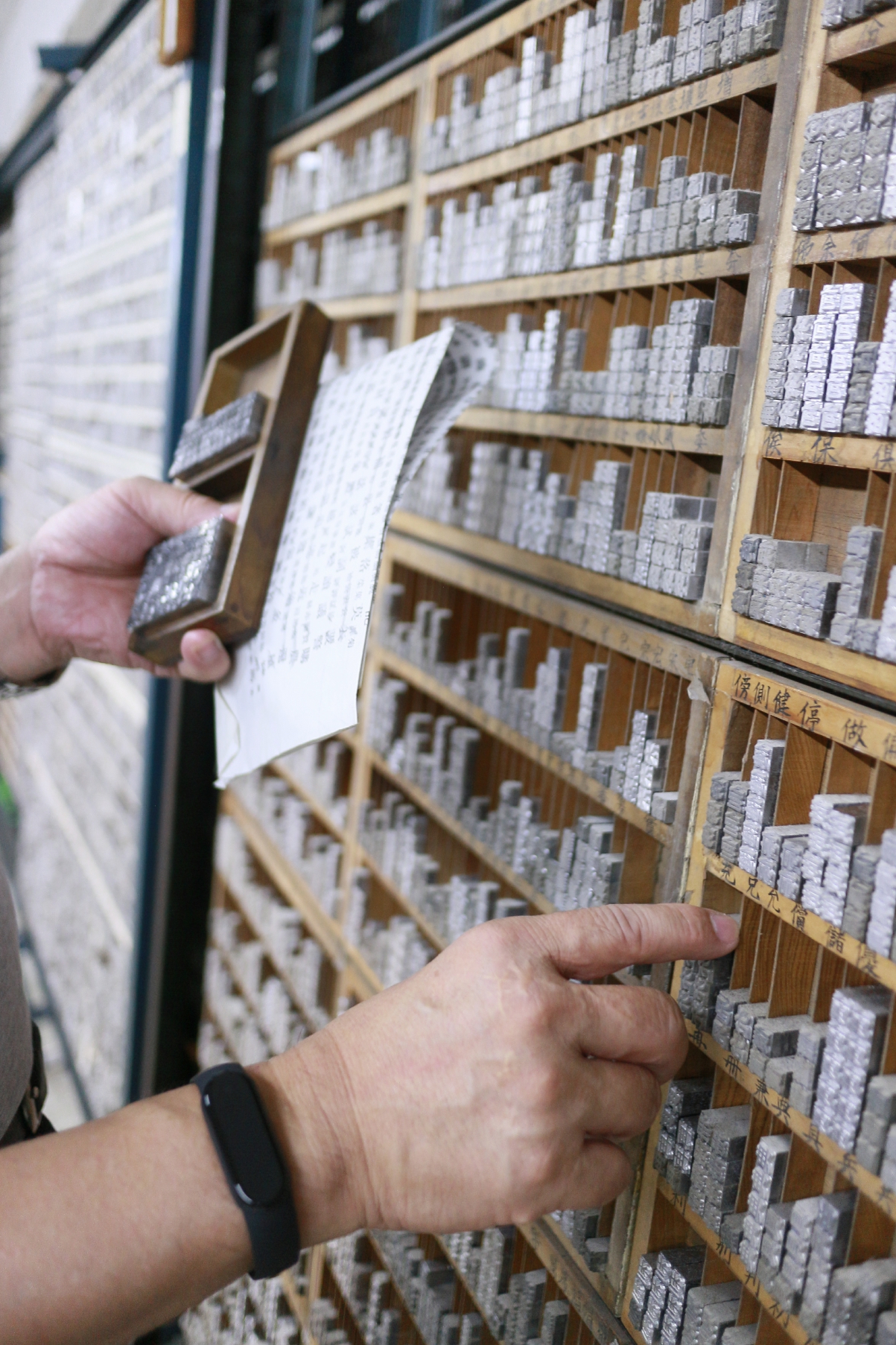







檢字作業是指檢字師傅依照原稿,從字架上檢取鉛字依序放在字盒內,再拿給排版師傅進行排版。日治時代稱檢字師傅為「文選」,即「檢索」之意,並不是「撿」。
檢字的步驟首先確認字架位置,接下來判定常用字與罕用字,再依部首、筆畫規則來尋找。例如:手部在字架約30%位置、木部在45%、水部在47%、言部在80%……等。如果檢的字缺了或找不到,檢字師傅不會停下來,而是會隨意找個字倒過來,稱之為「屁股字」。將缺的字重新再鑄,或是直接用木頭刻字填補。
早期日星鑄字行的每個廊道都站了五至六個人,最多的時候還有十一個人在一個廊道一起工作。在活版印刷全盛時期,一位經驗豐富的檢字師傅一小時可以檢一千多個字,一天可能要工作十幾個小時。通常在職員工檢內文的大、小標題;而計件人員多半檢內文。檢出的鉛字若有錯誤不會再放回字架上,這不僅是因檢字師傅為按字計酬,更是要確保字不誤植。
Type indexing refers to a task that indexing masters index types on typeset shelves and put them in the indexing box in sequence. Afterwards these chosen types are brought to typesetting masters to set types for printing. During Japanese Occupation period, indexing masters were called “インデックス” which meant “index,” not “pick up.”
The first step of indexing types is to locate the typeset shelves. Next, based on the frequency of usage, radicals and strokes, the right types are found. For example, the radical “手” (meaning hand) is roughly located on the 30 % area of the typeset shelves, the radical “木” (meaning wood) on the 45 % area of the typeset shelves, the radical “水” (meaning water) on the 47% area of the typeset shelves and the radical “言” (meaning speech) on the 80 % area of the typeset shelves and so on.
If indexing masters cannot index any types, they will randomly find a type and reverse it and they call it “behind facing forward type.” And typecasting masters will cast these missing types again or engrave them on wood instead.
At an early stage in Ri Xing Type Foundry, there were at least five or six people standing together among the aisles, sometimes up to eleven people. In the heyday of letterpress printing, an experienced indexing master could index more than one thousand types per hour and worked for more than ten hours per day.
Generally, full-time indexing masters indexed the heading and subheading of the manuscript and part-time indexing masters indexed the content of the manuscript. If types were wrongly indexed, they are not returned back to the typeset shelves. It was not only that indexing masters were paid on a word basis, but also that the type foundry could make sure that types were not returned back to the wrong typeset shelves.