





From the Japanese-era Koo family “Takasago Iron Foundry to the postwar Secrets Bureau North Branch
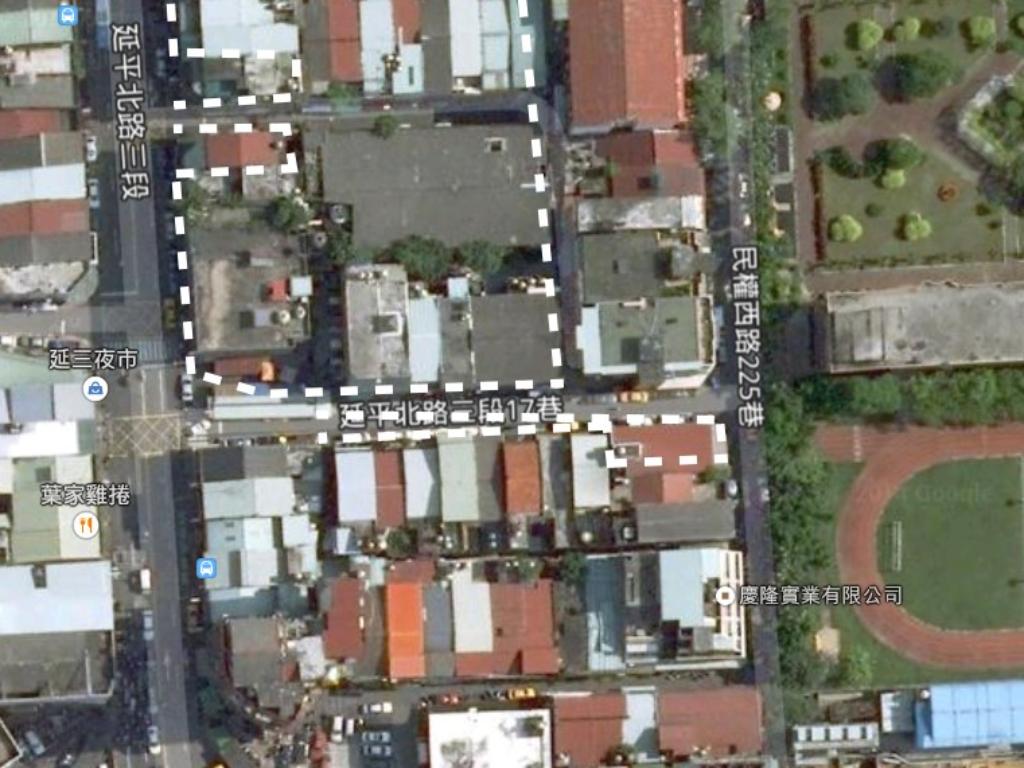
The Secrets Bureau North Branch, official name unknown, was affiliated with the Secrets Bureau of the Ministry of National Defense. The time of establishment and abolition are unknown (approximately established in the early 1950s); it was located at today’s No. 46, Yining Street, Taipei City (roughly east of Section 3, Yanping North Road, north of Yining Street, west of the Daojiang High School of Commerce, and north of Lane 17, Section 3, Yanping North Road).
The North Branch was at the original site of the “Takasago Iron Casting Stock Corporation,” established during the period of Japanese rule in September 1917 in Taihei-chō, Taihoku-shi (Taipei City). The company was the family business of the Koo family from Lukang, with Koo Hsien-jung as the president. In 1937, Koo Yen Pi-hsia assumed the role of the president (mother of Jeffrey Koo Sr. of the Chinatrust Group and wife of Koo Yue-fu); in 1941 the company changed its name to the “Takasago Iron Works Stock Corporation.” In 1950, because Koo Yen Pi-hsia funded and covered for the pro-communist writer Lu Ho-jo involved in the Luku Incident, the foundry was “confiscated” and converted into the “North Branch” for interrogation and detention. Koo Yen Pi-hsia was also sentenced to seven years of prison for “funding communist bandits,” and was jailed in the iron foundry (the North Branch) originally owned by her own family.
The Secrets Bureau of the Ministry of National Defense was the main institution for investigating political cases in the early 1950s and was responsible for protecting sensitive information and countering espionage. The Secrets Bureau of the Ministry of National Defense had two well-known prisons in Taipei City for interrogating political criminals, one was the “South Branch” (on the side of the Garrison Command) located on today’s Yanping South Road, and the other was the North Branch (Takasago Iron Foundry) located on today’s Section 3, Yanping North Road. At that time, major cases were mostly handled by the South Branch; however, since the number of political criminals later increased immensely, some prisoners were transferred to the North Branch.
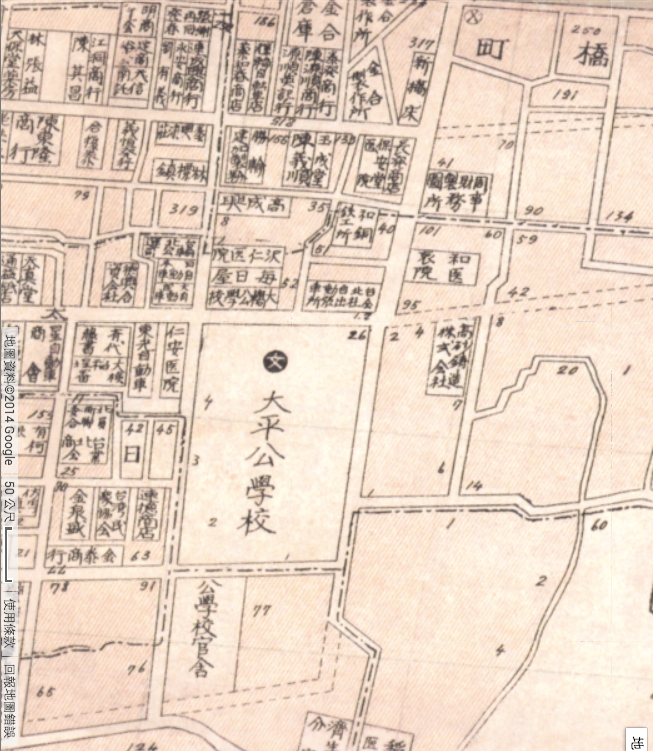
▲ Occupation Detail Map of Taipei City in 1928 in which the “Takasago Iron Casting Stock Corporation” can be seen. (Source: Research Center for Humanities and Social Sciences, Academia Sinica)
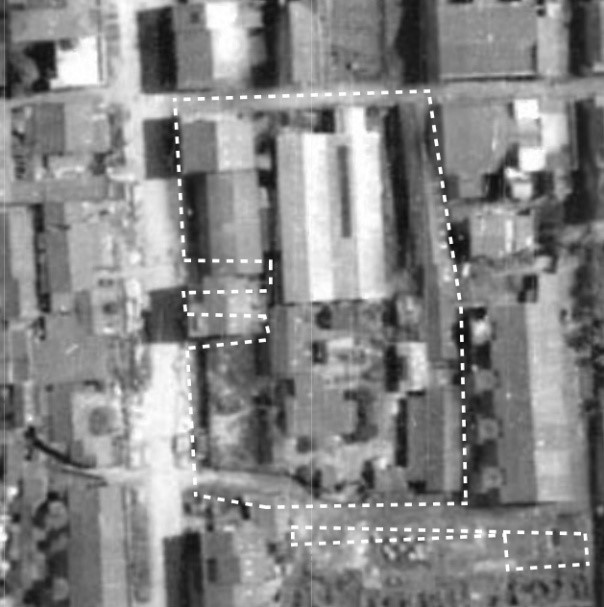
▲ Aerial photograph from 1945 by the US Army. (Source: Research Center for Humanities and Social Sciences, Academia Sinica)
Suffering in prison
Inside the Secrets Bureau North Branch, two rows of cells were created with wooden fences, and the cells were divided by wooden boards, approximately 20 cells of which two were for females. Each cell was 8 meters in length and 4 meters in width, about 32 square meters. Each cell held 23 to 24 people, which was less cramped compared to the South Branch. Nevertheless, there was no sunlight inside the cells and it was always humid. Victims, locked up in a humid environment all day for a long period of time and malnourished, oftentimes developed edema.
Although the North Branch had more space than the South Branch and had easier access to water, the torture was as cruel as in the South Branch. According to victim Zhang Dabang:
Sometimes some Chinese people would come in and tell us that this is the Secrets Bureau, a place where people “can only go in but never out,” and said that there are also people of the Secrets Bureau locked up in here; they do not have to go through trials and can be dealt with using “internal rules.” I was shocked by what they said. At night, you heard women screaming and children crying (some people were jailed with their children). I was later told by other prisoners that they used toothbrushes to extract confessions from women! I then remembered the screaming of that woman I heard! At night, the screaming caused by torture was so loud that it was hard to bear. And then you heard prisoners begging in Beijing dialect: “Forgive me! Forgive me! I did not do it!” It was horrifying listening to this all night. How could anyone sleep? In any case, it was gloomy and terrifying. I was later locked up with Xu Guowei at the “Detention Center of the Military Law Office” and I saw the terrible condition he was in after having been tortured by the Secrets Bureau in order to get a forced confession, having multiple bruised ribs and those bruises turning yellow. You could tell how miserable he was being tortured at the Secrets Bureau. I think that is what the phrase “you no longer want to live but you cannot die” means!
At present, the old buildings of the Takasago Iron Foundry have been completely demolished and rebuilt. The main buildings in the area now are mixed residential and commercial buildings constructed since the 1970s, and in the evening, the area is the Yanping South Road Night Market where vendors gather along the street.
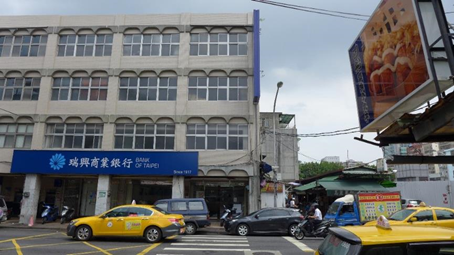
▲ The present look of the original site of the North Branch; buildings of the former Takasago Iron Foundry have been completely demolished. (Source: National Human Rights Museum)