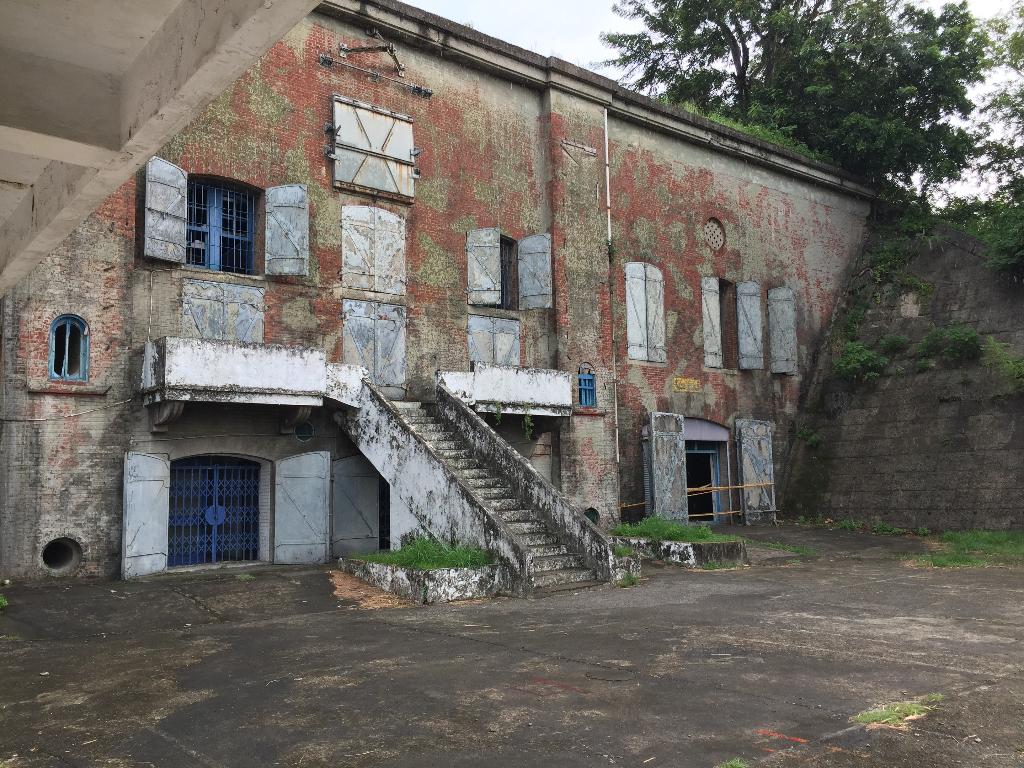








From the Japanese-era Navy Communication Center to the postwar Fongshan Navy Guest House
The Detention Center of the Intelligence Department under the Navy Command, also known as the Fongshan Navy Guest House, or Fongshan Guest House for short, was established in July 1949. The detention center was located at today’s No. 10, Shengli Road, Fongshan District, Kaohsiung City. In the early 1950s, the center was a designated place for trying ideological convicts and to extract confessions through torture during the Navy White Terror Cases. The center detained as many as 1,500 people, likely making it the largest postwar interrogation prison.
The location of Fongshan Guest House was the former base of the Fongshan Communication Center of the Japanese Navy, established in 1919 at the earliest. The communication center was the place for long-distance radio communication of the Japanese Navy during the World War I. It was built because of the “Southern Expansion” policy and was the second communication center built by Japan after the Funabashi Communication Center, providing communication channels for southern Japan to communicate with other places. The base was round and covered a large area. On today’s aerial photos the astonishing scale from that time can still be seen. After World War II, the Nationalist Government Navy took over the place and divided the base into three parts, a military dependents’ village, a communication station, and the Fongshan Guest House. The Fongshan Guest House was located in the center of the original communication base. The building was a Japanese-style brick building. In addition, there were also communication-related facilities such as a large bunker, a small bunker and a radio station.
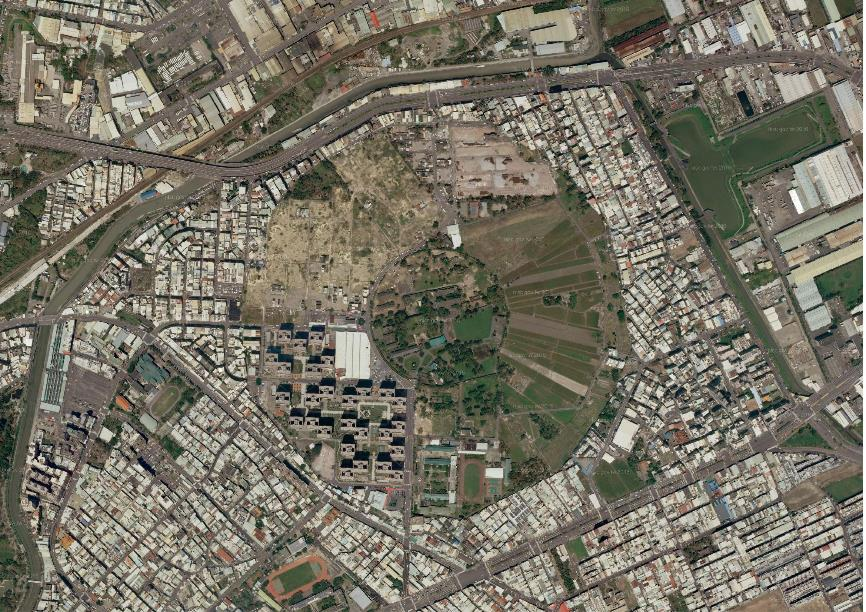
▲ Aerial photograph of the Fongshan Guest House shows the large scale of the man-made landscape. (Source: National Land Surveying and Mapping Center)
In 1949, “Fongshan Guest House” was first established as a temporary organization (no relevant organization names were found in the Navy’s list of organizations, equipment and history; the name was only found in individual military service records or related files of sedition cases). It was later placed under the 4th Division of the Political Warfare Department under the Navy Command. The name “Guest House” was used as a cover and prisoners inside the center were referred to as “guests”; however, the center was actually a “detention center” of the intelligence department, and was used to interrogate and detain political criminals and ideological criminals within the navy, after being trialed in the Third-Floor Iced Tea House by the Taiwan Task Squad of the Navy Command.
Founding Director Ku Chao-kuang of the Kaohsiung Military Dependents Village Development Association said that the confinement space of the guest house was divided according to military ranks into “privilege cells,” “ordinary cells,” and “the Cave”:
The cells that detained prisoners were divided into rankings just like military ranks. The radio emission station that was built the earliest was called the large bunker, and was used to detain low-ranking soldiers and related personnel. The building was also called “the Cave” because soil covered the roof to prevent bombing. The former offices of the communication center were divided into guest rooms, interrogation rooms, and “ordinary cells” for detaining ordinary officers and “privilege cells” for officers with a rank of captain or higher.
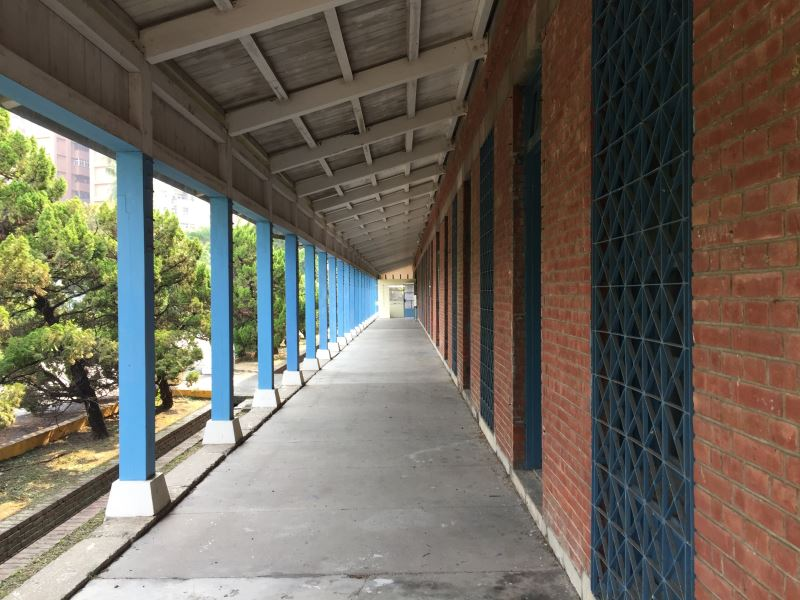
▲ The former offices of the Japanese communication center were rebuilt into the “privilege cells” and “ordinary cells” of the Fongshan Guest House to detain high-ranking officers. (Source: National Human Rights Museum).
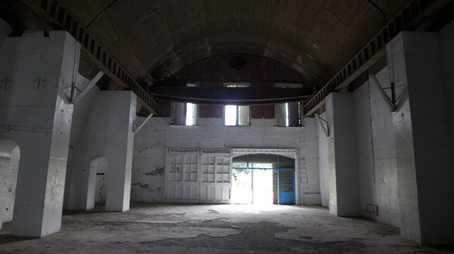
▲ The former large bunker of the Japanese communication center, which was later converted into “the Cave” of the Fongshan Guest House for detaining low-ranking officers. (Source: National Human Rights Museum)
Entering the Guest House meant entering a graveyard for the living: the most terrifying interrogation prison
The “Zuoying Avenue Third-Floor Iced Tea House,” the “Fongshan Guest House,” the “Navy Anti-Communist Pioneer Training Camp,” the “Marine Corps Training Unit” (Navy Disciplinary Team) and the “Detention Center of the Military Law Office under the Navy Command” were all used in 1949 as temporary units for the interrogation, detention and sentencing of navy officers and sailors arrested during the Navy White Terror Incident. The reason for their establishment were the Navy’s internal clean-ups.
Victims imprisoned in the center in the 1950s all described this guest house as a detention center with the worst environment possible, a concentration camp like a “living purgatory.” Peter Faun described the experience most vividly in his memoir Misty Voyage. The World War II dugout left by the Japanese government was divided into two hundred four-person cells with a size of three tatami mats and no sunlight. The meals were mostly moldy rice mixed with chaff and sand, pickles and half a bowl of dish water soup with no vegetables. The interrogation rooms inside the Cave had a comprehensive set of torture instruments. The torture methods included forced water ingestion and being tied on the tiger bench (joint bending), and the abuses included caning, sexual violation and abuse. Prisoners were even forced to dig trenches that turned out to be used to bury the bodies of fellow inmates that were killed or died of torture; there were even cases of inmates being buried alive collectively. Victims who survived were permanently traumatized physically and mentally after witnessing the terrible deaths of other inmates, being physically tortured, and experiencing great mental stress for living under fear and worry for a long time.
From the closed Navy Mingde Training Camp to the open White Terror historical ruins
In 1962, the Fongshan Guest House was rebuilt into the Navy Disciplinary Camp, and in July of 1976, it was further rebuilt into the Navy Mingde Training Camp to deal with undisciplined soldiers. The camp was under the management of the Marine Corps Command for the purpose of assisting in the training. In March 1992, it was reorganized under the Navy Command; in 2001, the camp was abolished due to organizational changes and was left as unused ruins.
In 2004, the Bureau of Cultural Affairs of the Kaohsiung County Government registered the “Former Japanese Navy Fongshan Communication Center” as historic buildings and appointed the center as a county-designated historic site in 2007. The center was further appointed by the Council for Cultural Affairs on August 30, 2010, as a national historic site. On March 6, 2016, the buildings were seriously damaged in a fire of unknown cause. At present, the main buildings that remain are the large bunker, the small bunker, offices, classrooms, the bath shed, the warehouse, officer dormitories, the radio station and water towers. It is managed by the Political Warfare Bureau of the Ministry of National Defense, with the Bureau of Cultural Affairs of the Kaohsiung City Government carrying out supervision in the Political Warfare Bureau’s stead. Currently, the center works with the Kaohsiung Military Dependents Village Development Association, and is open to the public on holidays, providing the general public a glimpse into the history of the White Terror period.