






From the Japanese-era Higashi Hongan-ji Temple to the Detention Center of the Garrison Command
The Detention Center of the Security Office under the Security Command, established approximately after World War II (detention records were found for the February 28 Incident), was situated at the site of the former Higashi Hongan-ji (Eastern Hongan Buddhist Temple), today’s No. 36, Xining South Road, Taipei City (roughly in the area between Kunming Street, Hankou Street, Wucheng Street and Xining South Road of Ximending, Taipei City), covering an area of approximately 8,600 square meters. The detention center located in the former Higashi Hongan-ji was first under the management of the Security Command, and in 1958, organizations were combined and the center came under the management of the Garrison Command, becoming an important facility for imprisoning and interrogating political prisoners in the 1950s and 1960s during the White Terror period. Around 1970, the Garrison Command was relocated to its new address in the city on Bo’ai Road. After the lifting of martial law, the dissolution of the Garrison Command started on July 31, 1992, and after multiple organizational changes, it was officially reorganized as the Armed Forces Reserve Command of the Ministry of National Defense on March 1, 2002.
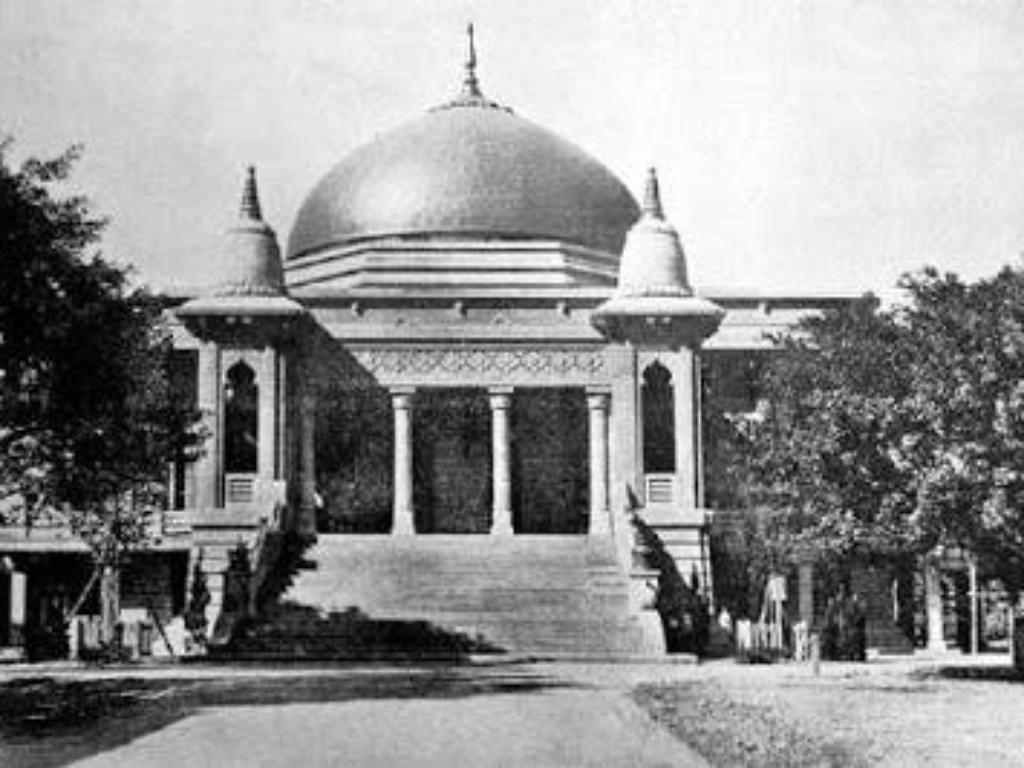
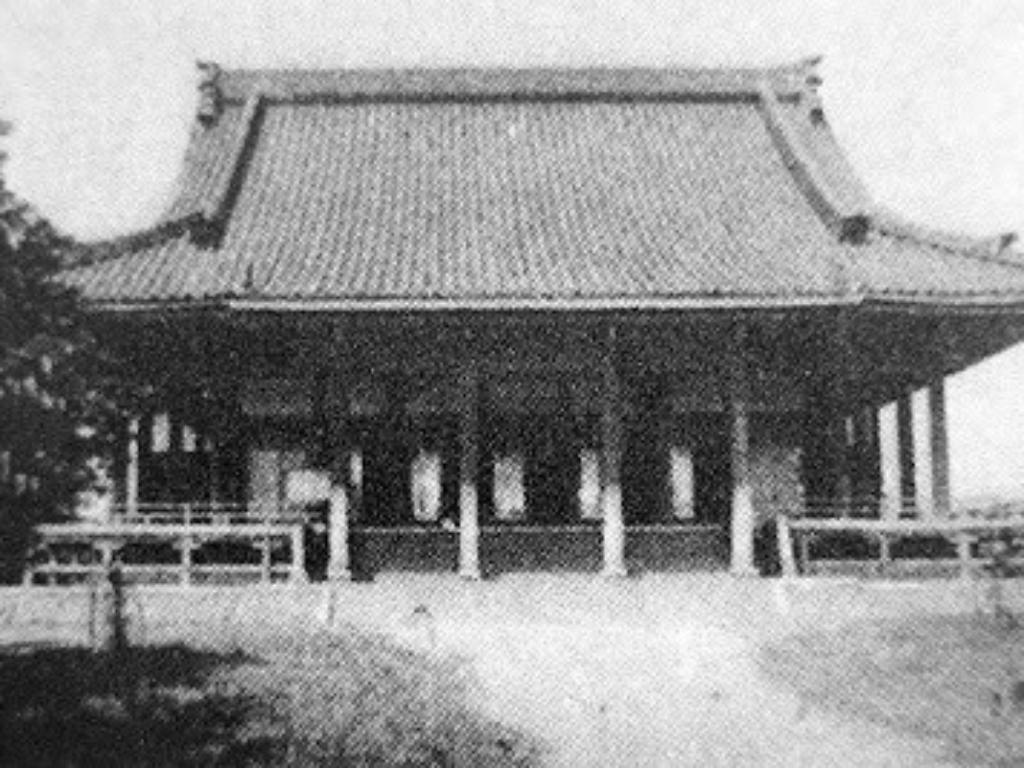
The original site of the Detention Center of the Security Office under the Security Command was the Higashi Hongan-ji (Taihoku Branch of Shinshū Ōtani-ha) during the period of Japanese rule. The temple was built in 1928 at 5-banchi, 2-chōme, Kotobuki-chō, Taihoku-shi. It was originally a wooden building, but was burned in a big fire in 1930, and was rebuilt as a reinforced concrete building on its original site in 1936. The exterior was in the “Tenjiku [Tianzhu] dome style” (an ancient Indian style), but the interior maintained the traditional Japanese style. Since the postwar period, the temple was used by the Taiwan Provincial Security Command, and the Detention Center of the Security Office under the Security Command was established. The center was used as a prison, keeping many political prisoners.
![Higashi Hongan-ji after reconstruction in 1936. The exterior was in the “Tenjiku [Tianzhu] dome style” (an ancient Indian style), but the interior maintained the traditional Japanese style](https://dcm.s3.hicloud.net.tw/new/h_upload/image/2019-12-05/0ef1f528-7f23-464d-aa51-a883e36329b2/452d46ad-e5d7-4a3a-84ea-03a2c5839d3e.png)
▲ Higashi Hongan-ji after reconstruction in 1936. The exterior was in the “Tenjiku [Tianzhu] dome style” (an ancient Indian style), but the interior maintained the traditional Japanese style. (Source: National Human Rights Museum).
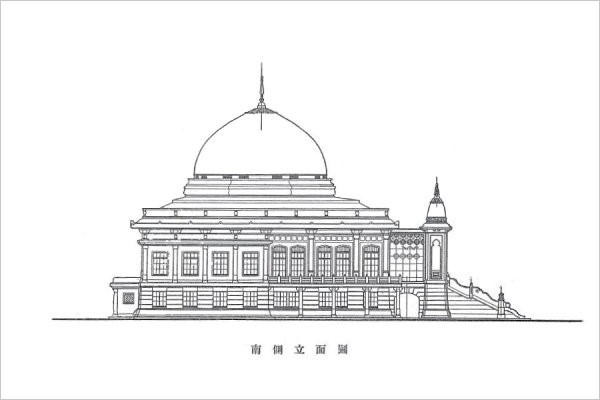
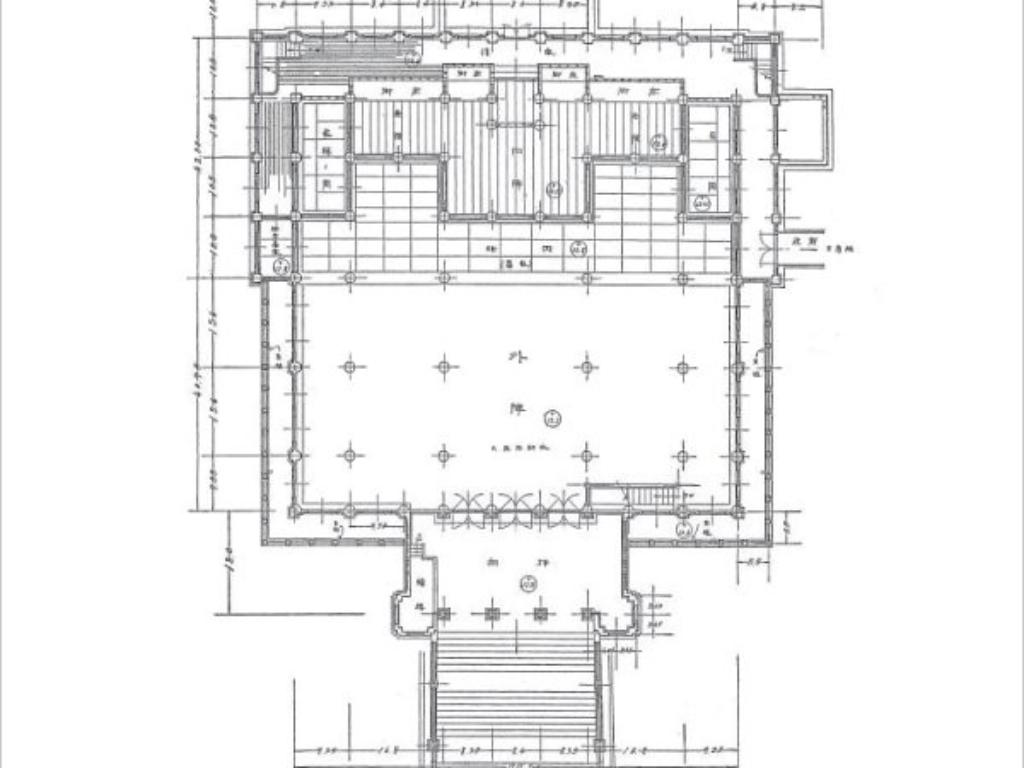
▲ South-side elevation view of the Higashi Hongan-ji in 1936. (Source: National Human Rights Museum)
From pure land to purgatory on earth
During the Nationalist Government period, the Detention Center of the Security Command (one of the predecessors of the Garrison Command) located in the former Higashi Hongan-ji was called the “Big Temple” by intelligence officers, whereas Taiwanese people called it the “Palace of Yama” (the King of Hell). In the early 1950s, it was described as the “purgatory on earth,” for often secretly executing prisoners.
Higashi Hongan-ji had wooden-fenced cells on one floor below ground and three floors above ground. The first floor had four rows of cells, two rows on each side, so there were approximately four interrogation rooms and twenty cells. The size of each cell was about ten square meters but had to accommodate twenty people; prisoners were forced to sleep standing up. The light of the cells was on all day and night, so people inside had no idea how long they had been locked up. On the second floor were single cells rarely seen in other places of detention. Each cell was approximately six meters in length and three meters in width. The cells were half a meter higher than the hallway and the space was cramped and gloomy.
The environment was terrible with cramped cells, noxious odors, a huge number of mosquitoes and lice and serious torture. Victim Huang Shigui said that he was severely tortured, bent over as a “human airplane” and forced to kneel down on a triangular board, to the point that he was oozing oil and was unable to walk. Lu Zhaolin said that the moment he was arrested by the Security Office, he was tortured (joint bending on a tiger bench, undergoing forced water ingestion, being electrocuted) and interrogated persistently without being able to sleep or drink water.
In 1967, the Detention Center of the Garrison Command that used to be in the Higashi Hongan-ji was relocated to the new address of the head office on Bo’ai Road, and the old building was sold to civilians by the National Property Administration of the Ministry of Finance. The old building of the Higashi Hongan-ji was completely demolished and three buildings were built on the same location in Ximending, the Lions’ Plaza Commercial Building, the Liufu Ximen Building, and the Eslite Wuchang Branch.
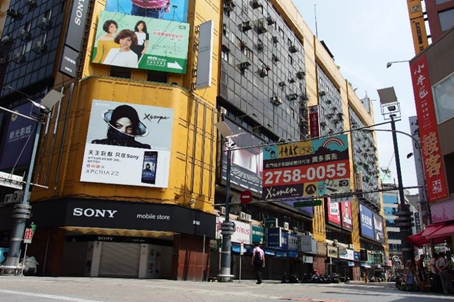
▲ The original building of the Higashi Hongan-ji was demolished and commercial buildings were built such as the Lions’ Plaza Commercial Building and the Eslite Wucheng Branch. (Source: National Human Rights Museum).