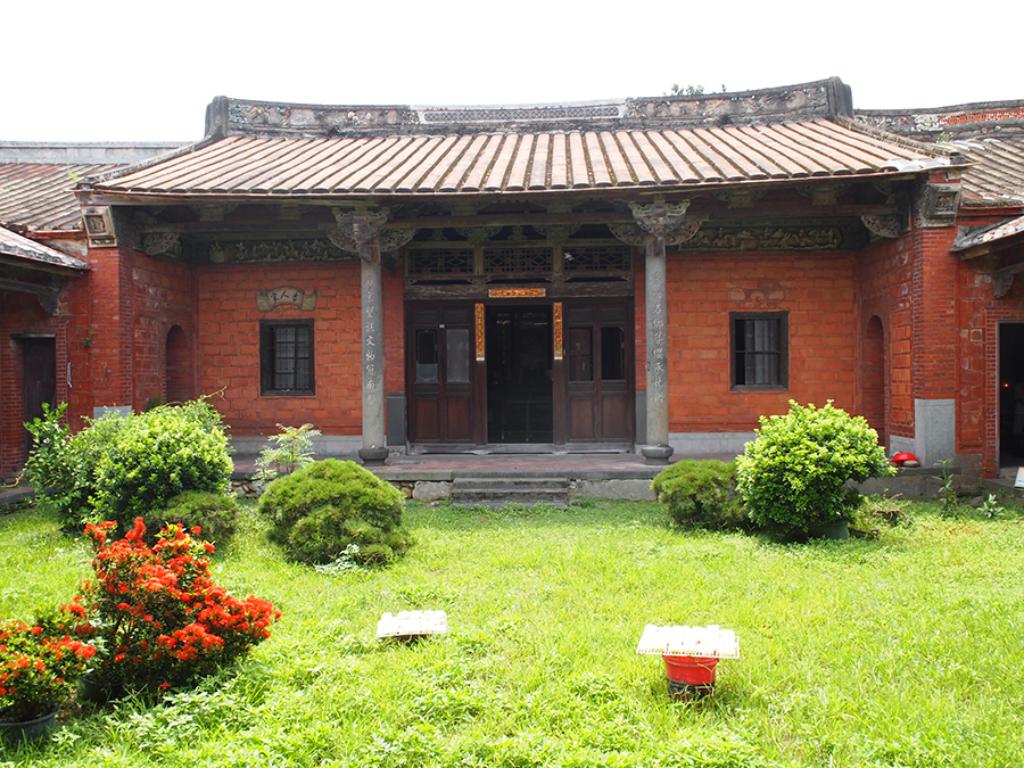







From the Hsu Ancestral Hall to a postwar “secret prison” run by the Secrets Bureau
The Celestial Prison’s official name was Taoyuan Correctional Facility of the Secrets Bureau under the Ministry of National Defense, also known as the Taoyuan Prison or the Hsu Ancestral Hall. The dates of its establishment and dissolution have yet to be verified (roughly from 1950 to 1958). It was located at today’s No. 31-1, Xizhou, Luzhu District, Taoyuan City (in the alley at No. 268, Section 2, Nankan Road). The building housed a temporary prison of the Secrets Bureau, an intelligence agency during the White Terror period in the 1950s.
The Celestial Prison was the ancestral home of Hsu Chung-te (head of the Taoyuan branch of the Popular Daily newspaper and two-term commissioner of Taoyuan County in 1951). Built by his grandfather Hsu Jinyu, the house was a traditional Minnan-style siheyuan with three entrances and two courtyards, occupying an area of approximately 6,600 square meters. The Hsu family occupied half of the compound, while the other half of the building and the outdoor space were converted to cells to hold prisoners. There were also guards stationed within the premise. The prison remained in use until 1958, it was relocated to “Wolung Mansion” in Longtan District.
Celestial Prison: Where “one’s own people” were persecuted during the White Terror
Historically, “Celestial Prison” referred to prisons in the capital overseen directly by the imperial court. These prisons were used to hold people of high status and the rich and powerful. The term “Celestial Prison” was used to distinguish this kind of prison from the “Earth Prison,” which referred to dungeons (underground cells) used to hold commoners. The Taoyuan Correctional Facility of the Secrets Bureau under the Ministry of National Defense was given the name “Celestial Prison” because the “convicts” held here were mostly dissidents purged from within the Nationalist Government or people occupying special positions, including members of the New 7th Army commanded by Sun Li-jen (General Lee Hung, Commander Chen Ming, Regiment Commander Peng Keli, and other high-ranking officers), Sun Liren's secretary Huang Zheng (Huang Meizhi) and her sister Huang Jue, members of the Secrets Bureau such as Qiao Jiacai, Jiang Shengsan, and Liu Changqing, renowned journalist Gong Debo, Minister of the Provincial Task Committee Zhang Zhizhong, National Assembly representative Lin Zigui, Lieutenant General of the Ministry of National Defense Li Yutang, Director-General of the Military Law Bureau under the Ministry of National Defense Bao Qihuang, and even Mongolian and Russian air force officers who sought asylum at the US Embassy but were secretly arrested and imprisoned.
Victim Gong Debo wrote a detailed description the Celestial Prison in his essay “A Personal Account of Chiang Kai-shek’s Dungeons” from his book Shocking Tales of the White Terror: a residential building was converted into a prison, each cell was about 20 meters long and 12 or 13 meters wide. Wooden fences separated one dark and damp cell from the next, and, at its peak, each cell held more than 20 people. The prisoners drank muddy water drawn up from the well. When it got dark, kerosene lamps were lit, which produced smoke that assailed the nostrils. For the special prisoners imprisoned in the Celestial Prison, conditions were harsh. However, due to the past identities of these prisoners, and their backgrounds as “former officers,” “former comrades” and “one’s own people,” the prison warden and guards did not dare go too far in exploiting them, and were more lenient in their supervision. As such, prisoners in the Celestial Prison had better food than in other facilities, and they were not only given newspapers such as the Central Daily News, the Taiwan Shin Sheng Daily News or the China Daily News to read, but were also allowed to talk freely, and there were no reports of inmates being abused.
Today, the building is still in good condition and stands as private property. It is surrounded by bamboo, and the remains of a concrete sentry post can be found outside the side-gate, a testament to the building’s history as a secret prison.
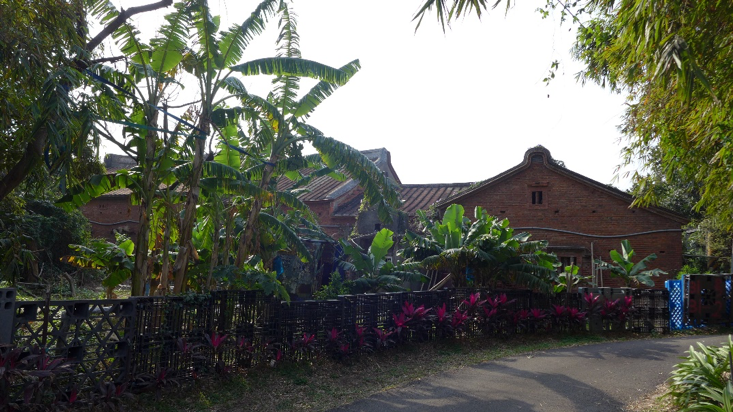
▲ The main hall of the Hsu Ancestral Hall and the right wing. (Source: National Human Rights Museum)
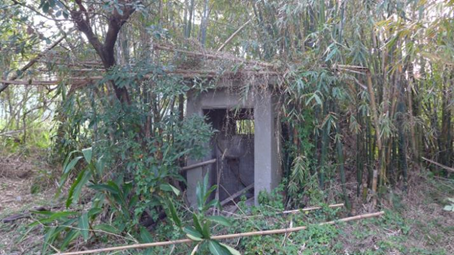
▲ The remains of the sentry post outside the side-gate of the Hsu Ancestral Hall. (Source: National Human Rights Museum)