






From late-Qing military training ground to the postwar Military Law Office of the Taiwan Garrison Command and Military Law Bureau of the Ministry of National Defense
The Detention Center of Military Law Office, operating from 1949 to 1992, was originally under the jurisdiction of the Taiwan Provincial Security Command and was reorganized into the Taiwan Garrison Command in 1958. In its initial stage (1949-1967), it was located at today’s No. 3 Qingdao East Road, Taipei City, sharing the same address with the Detention Center of the Military Law Bureau under the Ministry of National Defense, roughly in the block surrounded by today’s Section 1, Zhongxiao East Road to the north, Linsen South Road to the east, Qingdao East Road to the south and Zhenjiang Street to the west (the block surrounding today’s Taipei Sheraton Grand Hotel). In 1968, it was moved with the Military Law Bureau of the Ministry of National Defense and other units to the former location of the Military Law School next to Xiulang Bridge (also named Jingmei Detention Center of the Garrison Command, currently the Jing-Mei White Terror Memorial Park). After the lifting of martial law, it was disbanded along with the Taiwan Garrison Command in July, 1992.
During the late-Qing period, today’s No. 1 and No. 3 Qingdao East Road used to be the location of the Bureau of Commerce and a military training ground. In 1895, in the period of Japanese rule, the area was changed into a camp for cavalry squadrons and a training ground for soldiers. After Taipei City had undergone urban development, the facilities were rebuilt into warehouses for the Army Management Department. Despite having been bombed by the US military during World War II, the buildings were mostly preserved intact. After the war, the Nationalist Government took over the area in 1949. The Military Law Office of the Taiwan Provincial Security Command/Taiwan Garrison Command and the Military Law Bureau of the Ministry of National Defense all moved in and established separate detention centers. The east building on Linsen South Road was administered by the Military Law Bureau, holding mainly political prisoners. The west building on Zhenjiang Street was affiliated with the Military Law Office, holding mainly military prisoners. Both served as the places to hold and try members of the military accused of crimes, criminals who committed severe crimes and political prisoners sent from the Higashi Hongan-ji (Eastern Hongan Buddhist Temple) or the Secrets Bureau. In addition to detaining a great number of captives awaiting trial, it was also an important place used as substitute prison to incarcerate convicts already sentenced.
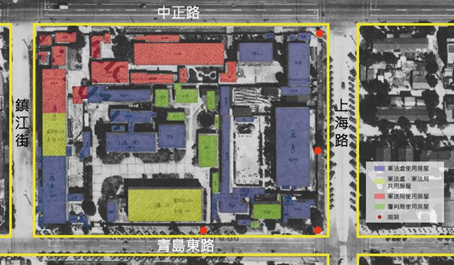
▲ Building usage of the Military Law Bureau and the Military Law Office on Qingdao East Road. (Source: Concluding Report on the Investigation into Historical Sites Associated with the White Terror Period in Taiwan, National Human Rights Museum, 2015)
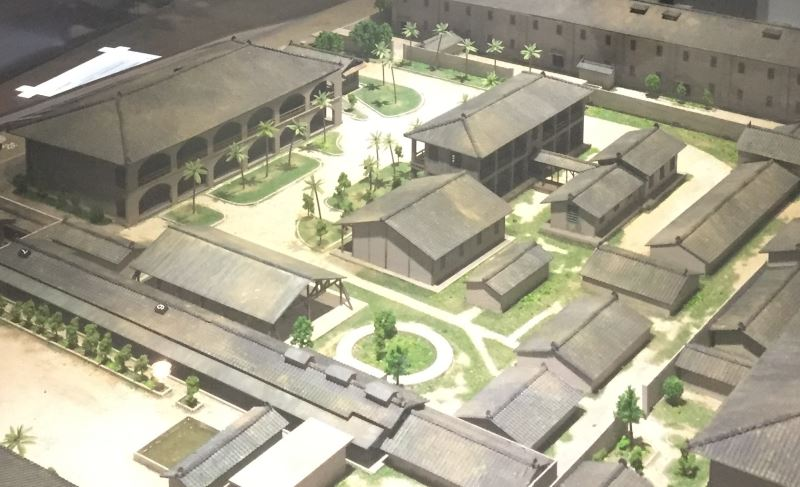
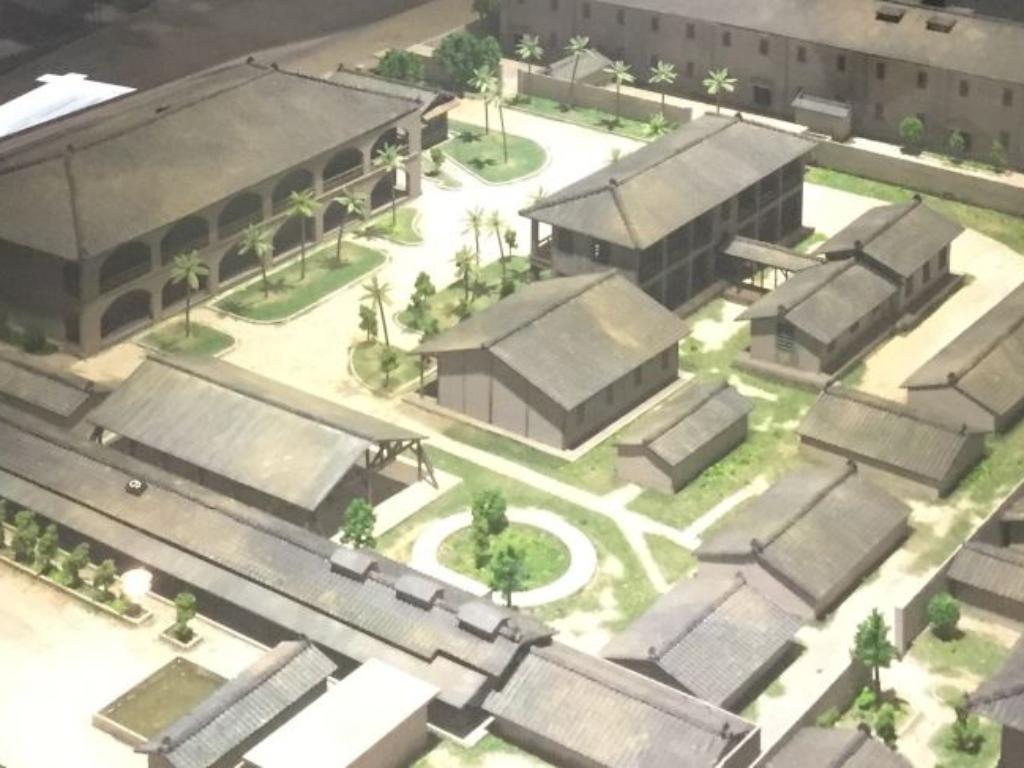
▲ Model of the Detention Center of the Military Law Office on Qingdao East Road. (Source: National Human Rights Museum)
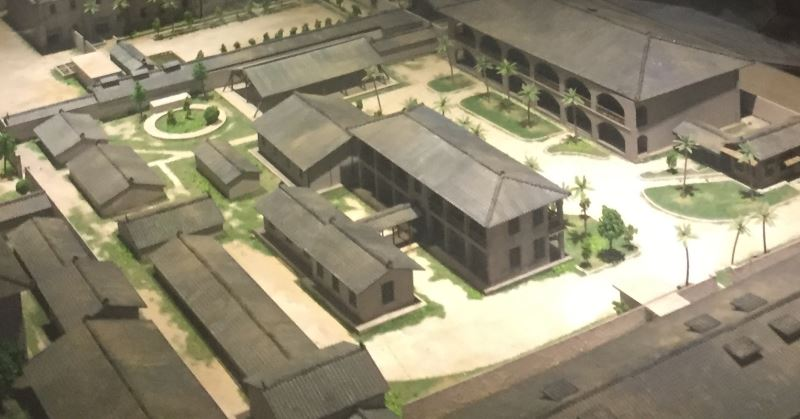
▲ Model of the Detention Center of the Military Law Office on Qingdao East Road. (Source: National Human Rights Museum)
After the large number of arrests during the White Terror in the 1950s, the Detention Center of the Military Law Office was overcrowded. According to Chiang Ching-kuo’s report titled “Inspection Account of Military Prisons and Detention Centers in Taiwan,” in 1950 there were 1,033 prisoners and over 800 suspects incarcerated. The holding cells were too cramped to lie down, so prisoners needed to take turns sleeping, and some even had to stand sleeping. At the height of summer, the confined space was filled with stifling heat, making the crowded place fetid. Rats and pests ran wild in the cells, and most prisoners were severely malnourished due to the extremely poor quality of the food. From mid-1950s, the detention center could enforce judgment of “political prisoners” whose convictions were confirmed and force them to carry out prison labor. Detention centers had facilities for prison labor like laundering, sewing, ironing and handicrafts, and a civil engineering crew was established that had once taken part in the initial construction of Jingmei Detention Center.
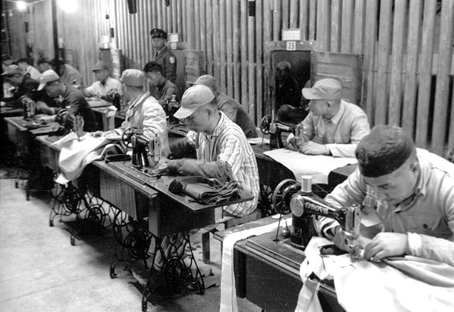
▲ Prisoners learning sewing at the Detention Center of Military Law Section. (Source: Central News Agency)
Arriving with pride, leaving with grief: a transit between life and death
Intellectuals arrived here with pride, then went one of two ways — they were either incarcerated on Green Island, or forever left the world of the living at Machangding…
We memorized the number of “rebels” who walked past us every day, or the messages from unknown places about all the blood that had been spilt at Machangding. As if chanting sutras, we sang “Rest in Peace, My Deceased Comrade” for them, again and again.
— Yen Shih-hung, No. 3, Qingdao East Road: My Hundred-Year Memories and Taiwan’s Outrageous Era
The last checkpoint of the interrogation of political prisoners, known as the “Gates of Hell,” was on No. 3, Qingdao East Road where it would be decided whether prisoners would be executed or left alive. A small number of the prisoners whose conviction had been confirmed would serve their sentences here or at other branches, and others would be sent to Green Island for imprisonment. Every day around four or five in the early morning was the most nerve-wracking and terrifying moment, with the guard’s steps and the sound of the iron gate opening to mark the life-or-death moment of whether or not one’s name would be announced to be executed at Machangding.
From the absurdity of the 1950s the prosperity of the 2000s
As stated in the November 22, 1967, file “Relocation Plan of the Detention Center of the Military Law Office of the Taiwan Garrison Command” from the Military Law Office Relocation Program: “The center is required to be temporarily relocated from Qingdao East Road, Taipei City to the Ankang Branch within the allotted time (before December 24, year 56 of the Republic [1967]); after the new construction has been completed, it must again move from the Ankeng Branch to the Jingmei camp. During this period, continue incarcerating prisoners and enforcing sentences.” This shows that from December 1967 to June 1968, the Detention Center of Military Law Office was temporarily transferring its prisoners to the Ankeng branch (the Xin cell block of the Xindian Military Prison). After the completion of Jingmei Detention Center (now the Jing-Mei White Terror Memorial Park) in Xindian in 1968, the units and detention centers attached to the Military Law Office of the Taiwan Garrison Command and the Military Law Bureau of the Ministry of National Defense were moved in.
The land of the former site on Qingdao East Road was later released for civilian use. The old buildings of the former Military Law Office were completely torn down, and the northern half of the block became the Taipei Sheraton Grand Hotel it is today, while the other parts were rebuilt as the First Insurance Building, First Huaxia Building, Qinglin Building, Qingdao Building, Textile Company Building and Guanglong Building.
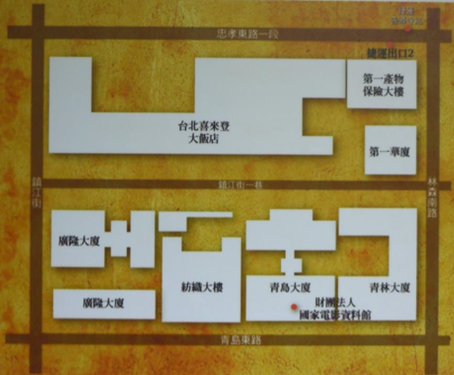
▲ The modern-day appearance of the former location of Military Law Office and Military Law Bureau (No. 3, Qingdao East Road). (Source: Concluding Report on the Investigation into Historical Sites Associated with the White Terror Period in Taiwan, National Human Rights Museum, 2015)

▲ Today’s No. 3, Qingdao East Road. (Source: June, 2017 ©2018 Google)