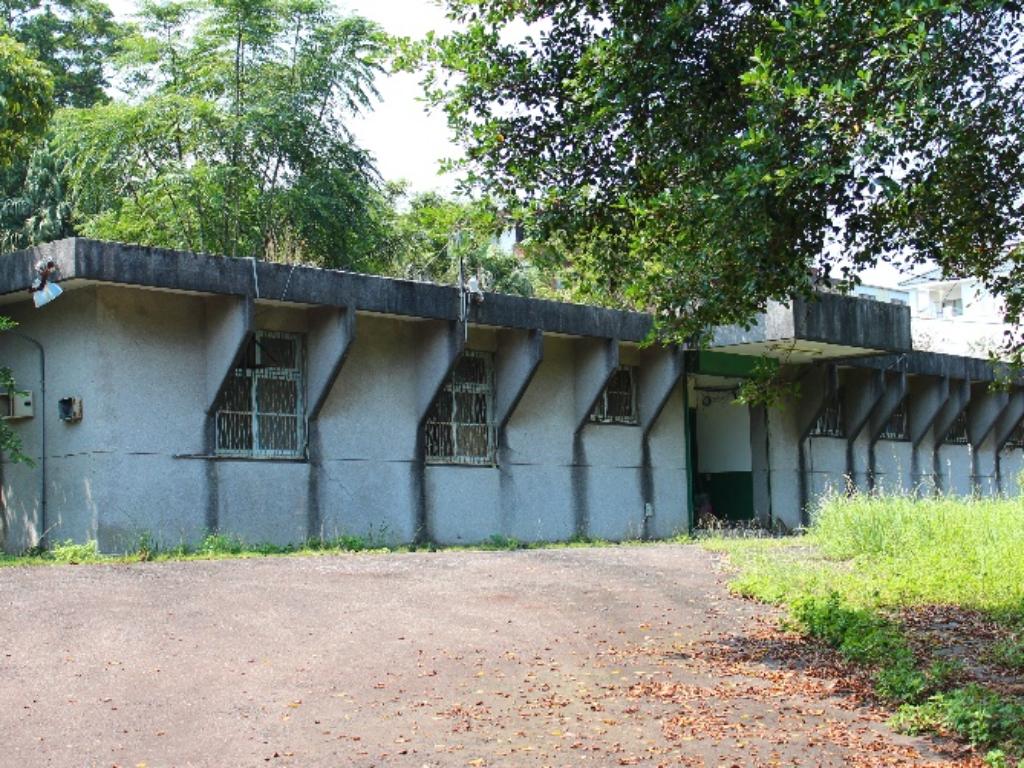








The world-infamous “Black Reception House”: Ankang Reception House
The Ankang Reception House of the Investigation Bureau under the Ministry of Justice, Ankang Reception House for short, was established on January 8, 1974, and was located at today’s No. 12, Shuangcheng Road, Xindian District, New Taipei City. Ankang Reception House housed holding cells. In addition to the Investigation Bureau, the Ankang Branch of the Military Law Office of the Taiwan Garrison Command (Jingmei Military Law Detention Center of the Garrison Command) also worked at the same site; there, it was subordinate to the Investigation Bureau of the Ministry of Judicial Administration and the Taiwan Garrison Command. Mainly used to detain and interrogate convicts charged with sedition, the interrogation of political prisoners implicated in major sedition cases, the Kaohsiung Incident and Operation Clean Sweep all took place here.
Ankang Reception House was built in 1973 and formally opened in 1974. At the time of its establishment, it was jointly operated and attached to the Investigation Bureau of the Ministry of Judicial Administration and the Taiwan Garrison Command. Ankang Reception House covered an area of about 4,634 square meters, with buildings covering an area of measuring 1,761 square meters (a 717 square meter recuperation area, a 502 square meter work area, a 420 square meter living area and a 122 square meter dormitory). The predecessors of Ankang Reception House were the interrogatory prisons of the Investigation Bureau in Taipei City, the “Dalongdong Interrogation House” operated before 1958 and the “Sanzhangli Guest House” operated from 1958 to 1972; Ankang Reception House continued to function in the same capacity. As areas around the Sanzhangli Reception Center became more developed, the population increased, lowering the confidentiality; the Investigation Bureau therefore decided to move the unit to the mountain areas in Ankeng, Xindian. Located on top of a small hill, Ankang Reception House had only one entrance and exit connecting it to the outside world, and given that the building itself was only one story high, the whole center was particularly low-key and secret. After the lifting of martial law in 1987, it was turned into a warehouse.
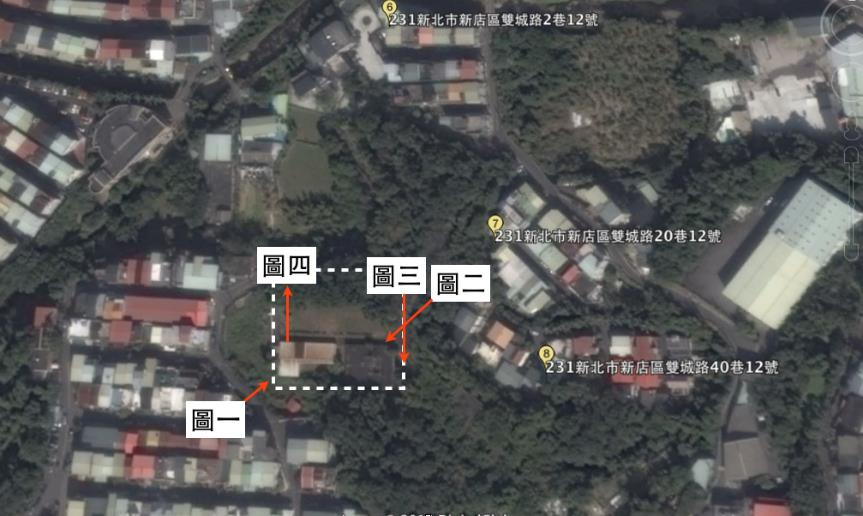
▲ Aerial photograph of Ankang Reception House on Google Maps. (Source: National Human Rights Museum)
Of all of Taiwan’s interrogation prisons, Ankang Reception House used to be the most internationally infamous one, on account of the many important “guests” it had received. High profile figures including former Democratic Progressive Party (DPP) Chairman Huang Xin-jie, writer Bo Yang, well-known radio presenter Tsui Hsiao-ping and Kaohsiung businessman Yang Chin-hai had all been interrogated here.
Arrested in 1976 for promoting Taiwan independence and planning to establish an opposition party, Yang Chin-hai was originally sentenced to death, but owing to the overwhelming support voiced at home and abroad, it was changed to life imprisonment. He underwent torture at Ankang Reception House, and when he fled in 1984, he used channels to convey the contents of 19 torture methods to Amnesty International. These were translated into five languages and brought to light internationally, drawing the world’s attention, as well as causing the infamous name “Ankang Reception House” to spread to other countries.
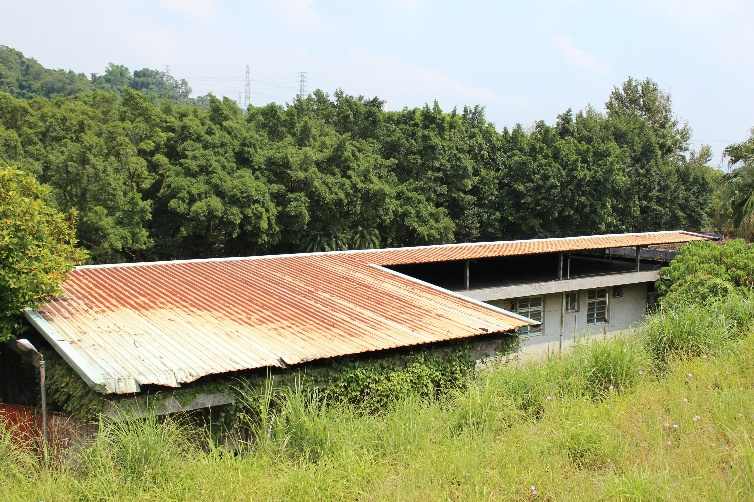
▲ Current look of one of the two remaining main buildings. (Source: National Human Rights Museum)
Exposure and uncovering: 50 jars containing human body parts and 1,232 White Terror-related files
Ankang Reception House, once jointly operated by the Investigation Bureau and the Taiwan Garrison Command, became a warehouse of the Investigation Bureau after the lifting of martial law in 1987. On March 3, 2009, a reporter from the “Apple Daily” exposed that Ankang Guest House had been abandoned without management, and that data and confidential files of political prisoners from the White Terror period had been dumped like garbage, as well as 50 jars containing human body parts. After the news release, the Investigation Bureau blocked the site and discovered 1,232 files of prisoners and defendants, which were all handed to the National Archives Administration. After removing repeated identities, there were 1,229 people investigated for involvement in sedition cases or in Operation Clean Sweep, but the actual number of prisoners is still unknown. As for the jars containing human body parts, according to the Investigation Bureau, they had already been turned over to other units for forensic research and academic use.
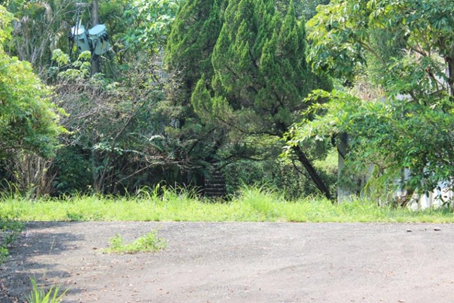
▲ Found to be without proper care and management, Ankang Reception House caused an uproar in 2009. (Source: National Human Rights Museum)
On August 7, 2018, the Transitional Justice Commission of the Executive Yuan carried out an on-site inspection. Though the buildings had been worn down over the years, the whole area had preserved the authoritarian spaces of the martial law period: the “work area” where intelligence officers of the Investigation Bureau interrogated prisoners, the “living area” which the Investigation Bureau used as an office, and the “recuperation area” which the Taiwan Garrison Command used to detain political prisoners, with holding cells and even the iron cabinets where forensic examiners stored corpses in formalin. What also remained was the “Gate of the Dead” that separated the Garrison Command and the Investigation Bureau’s jurisdictions, what oral history accounts identified as a holding cell in the basement, most likely a room located lower down the hill. Since the space remains unused today without proper management and use, it is planned to be preserved as a human rights culture park in the future.