






The 47 years of Taiwan Garrison Command after World War II: “Watch out for Communist spies and the Command!”
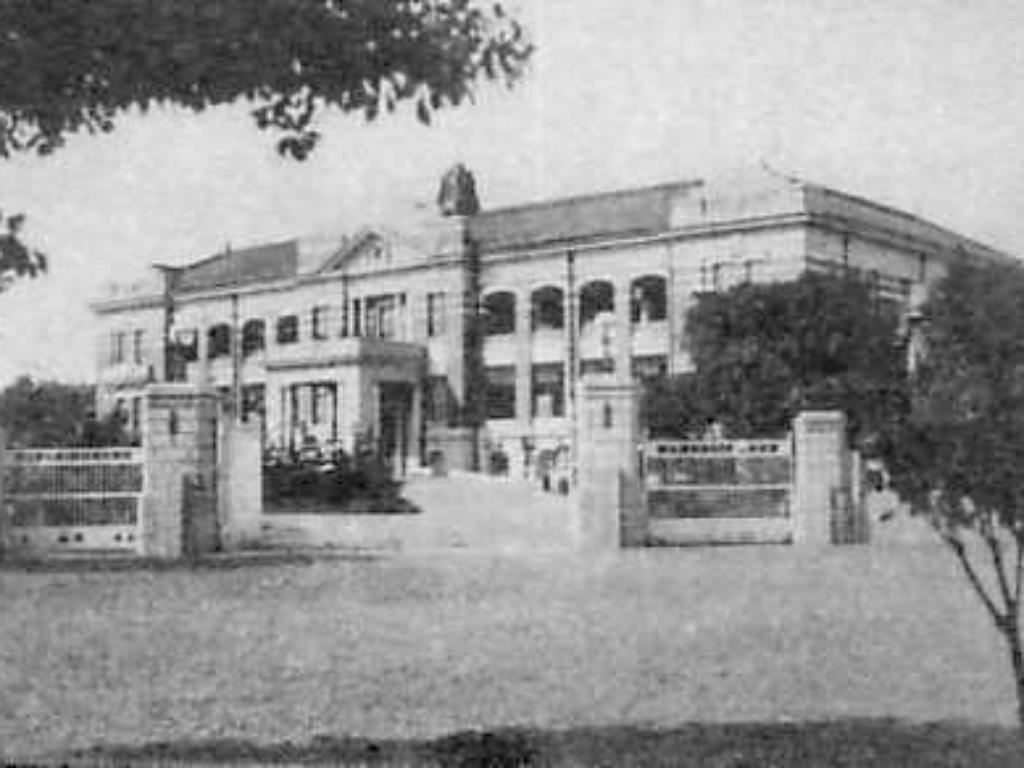
The Security Office of the Taiwan Garrison Command, short for the “Detention Center of the Security Office under the Taiwan Garrison Command” and also called the Garrison Command Security Office or simply “Garrison Command,” was subordinate to the Ministry of National Defense. It was established in 1958 (one of its former iterations was the Security Office of the Taiwan Provincial Security Command), and disbanded on July 31, 1992, following the dissolution of the Taiwan Garrison Command. Around 1970, Taiwan Garrison Command relocated from the Higashi Hongan-ji (Eastern Hongan Buddhist Temple) on Xining South Road to No. 172 Bo’ai Road (today’s Armed Forces Reserve Command of the Ministry of National Defense). In the 1970s, during the period of martial law, the site was a prison for interrogating and detaining political prisoners.
Taiwan Garrison Command was an institute created by executive order but without legal grounds. However, the Command had unchallenged, supreme authority, and controlled people’s fates during the White Terror and martial law periods after World War II. Prior to its inception was the “China Theater Taiwan Provincial Garrison Command,” established on September 1, 1949, in Chongqing (headed by Chen Yi as commander in chief). Its mission was to prepare for taking over Taiwan after the war, as well as assuming control of the equipment and resources of the “Taiwan Army of Japan Headquarters,” the intelligence agency during the period of Japanese rule. After the February 28 Incident, the name was changed to “All-Taiwan Provincial Garrison Command” on May 5, 1947 (headed by Peng Meng-chi as commander). On January 26, 1949, its name was changed back to “Taiwan Provincial Garrison Command”; on August 15 it was disbanded, and on September 1 the “Taiwan Provincial Security Command” was established.
On May 15, 1958, using the Security Command as its foundation, four units, the “Taiwan Defense Command,” the “Taipei Garrison Command,” the “Taiwan Provincial Security Command” and the “Taiwan Provincial Civil Defense Command,” were merged to form the new “Taiwan Garrison Command.” This was one of the eight major intelligence agencies during the period of martial law in Taiwan (the other seven being the Investigation Bureau of the Ministry of Justice, the Military Intelligence Bureau of the Ministry of National Defense, the Investigation Group of the Military Police Command under the Ministry of National Defense, the General Political Warfare Department of the Ministry of National Defense, the Kuomintang Mainland Affairs Committee, the National Police Agency under the Ministry of the Interior, and the National Security Bureau). The Taiwan Garrison Command operated until after the lifting of martial law, and was disbanded on July 31, 1992.
Purgatory on earth: cruel torture and fatiguing interrogations
The old address of the Garrison Command was that of the former Detention Center of the Security Office under the Security Command on Xining South Road, Taipei City. This was originally the Japanese-era Higashi Hongan-ji of True Pure Land Buddhism (currently Lions’ Plaza Commercial Building), called the “Big Temple” by intelligence officers and the “Palace of Yama” (the King of Hell) by convicts. Each cell of the Security Office was about 10 square meters in size and held 20 prisoners, who had to sleep standing. In the early 1950s, prisoners were often executed at night, and therefore the detention center was called “purgatory on earth.” It was relocated to Bo’ai Road, Taipei City sometime in the 1970s.
In Li Ao’s Memoirs, author Li Ao gives a detailed description of the cells in the Security Office: on the first floor were five interrogation rooms, which had a bathroom, a narrow bed, a small round table, a small side table and four bamboo chairs, but no window. The ceiling was covered with white bagasse boards with black holes in them, behind which were wires for sound recording, and in the corners were closed-circuit cameras for monitoring the prisoners. Five always-on lightbulbs were hung in the middle of the rooms. Dark-brown plastic was nailed at where the wall and floor met, and under the plastic was a layer of soft foam, giving it a soft quality. There was a palm-sized glass window near the top of the door for the security guard to look inside.
Li Ao, Hsieh Tsung-min and Chen Ming-chung were among the detainees here, and Chen Wen-chen was also taken here for interrogation by officers of the Security Command before he was murdered. When describing the Security Office, all victims mentioned the cruel torture and fatiguing interrogations used to extract forced confessions. The tortures methods included drug injections, pepper water sprays, whipping with bamboo or plastic sticks, electrocution, tiger benches (joint bending), “carrying a sword on the back” (being handcuffed behind the back with one hand over a shoulder) and “phoenix spreading wings” (rotating both arms like wheels). This shows the severity of the oppression of political prisoners at the Security Office.
In his book No Regrets, victim Chen Ming-chung offers the most detailed descriptions of these tortures. Chen was detained and tortured for three whole months until a doctor warned the Garrison Command that more torture would kill him. When Hsieh Tsung-min was unlawfully detained at the Security Office for the second time, the Garrison Command jointly worked on his case with the Investigation Bureau, the Taiwan Provincial Police Division and Taipei City Police Department. The fact that four different organizations worked together to torture him also explains that powers and responsibilities of police and intelligence agencies, as well as other units, were not clearly distinguished at the time. Hsieh’s case also explains that these units in practice took part in torturing political prisoners.
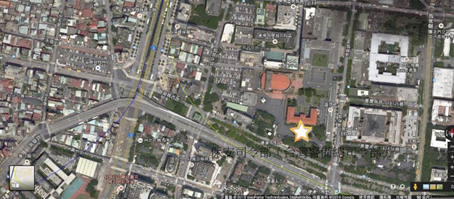
▲ Location of the Taiwan Garrison Command. (Source: Google Maps; star added.)
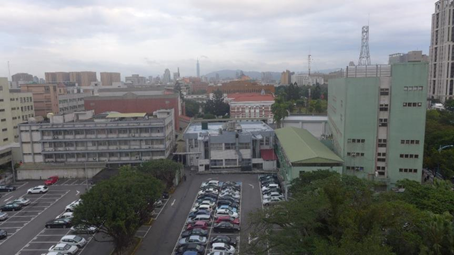
▲ Bird’s-eye view of the west side of the Taiwan Garrison Command. (Source: National Human Rights Museum)
After the Taiwan Garrison Command was disbanded in 1992, the site on Bo’ai Road became the Coast Guard Command on August 1 of the same year, the predecessor of today’s “Coast Guard Administration of the Ocean Affairs Council” and the “Armed Forces Reserve Command of the Ministry of National Defense.” The buildings on Bo’ai Road are currently a military control zone occupied by the Armed Forces Reserve Command. It is off limits to civilians and exploration of the area is prohibited. Therefore, a mysterious veil shrouds the “Armed Forces Reserve Command” that once used to house the Taiwan Garrison Command.