







From an iced tea house on the third floor to a detention center: the site of preliminary interrogation for “Navy White Terror Cases ”
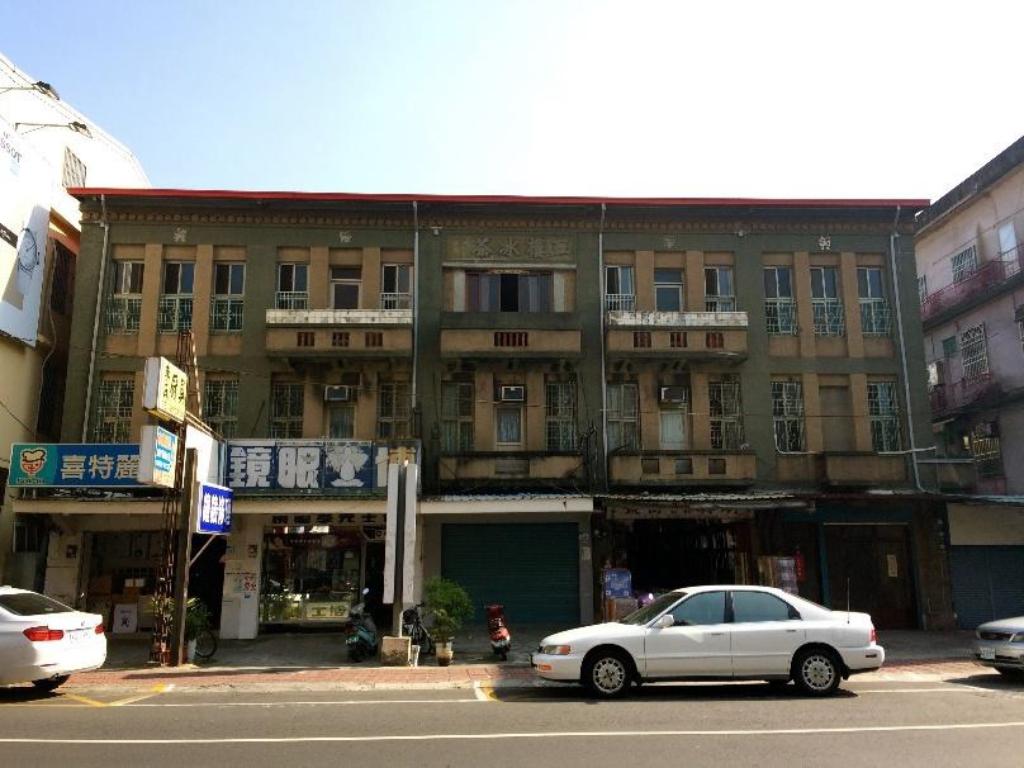
Also called “ Zuoying Avenue Third Floor” or “Third Floor,” the Detention Center of the Intelligence Department under the Navy Command sits at today’s No. 254 to 262 on Zuoying Avenue, Zuoying District, Kaohsiung City (the “Third-Floor Iced Tea House” of five connected buildings). With an unknown establishment date, the detention center was set up around 1949 and remained in use until the Navy Command relocated to northern Taiwan in 1954. It was likely used by the “Taiwan Task Squad” or the “Navy Intelligence Squad,” intelligence agencies of the Navy. During the Navy White Terror Incident in the 1950s, those suspected of disloyalty were temporarily detained here and had their preliminary interrogation.
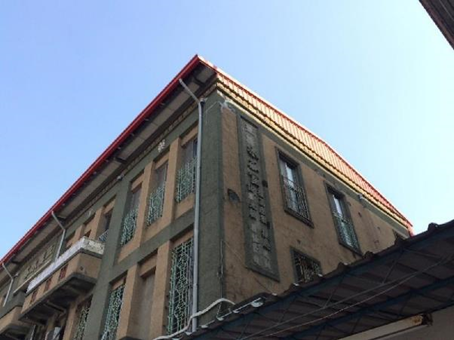
The buildings which the detention center occupied were originally constructed in 1941, when Taiwan was under Japanese rule. This yellow-brown western-style building was made up of five connected three-story buildings, and was called the Third Floor because of a sign in the middle that read “Third-Floor Iced Tea House.” Words that advertised the tea house on the south side of the buildings were written in a protruding regular script: “All guests are welcome in our fine tea house which provides excellent services.” Due to the use of Chinese characters and the style of the wording, it is speculated that the tea house opened after World War II, and was expropriated in 1949 by either the “Navy Intelligence Squad” or the “Taiwan Task Squad” of the Intelligence Department of the Navy Command and turned into a detention center. These five buildings originally housed “Dr. Tsai’s Dental Clinic” and “Xinglong Zuo,” Zuoying’s first theater opened by wealthy businessman Huang Chamou. Both businesses were likely forced out at the same time.
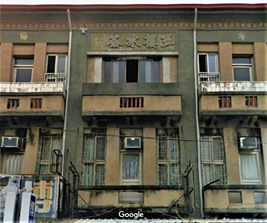
▲ A close-up of the Zuoying Avenue Third Floor building today. The “Third-Floor Iced Tea House” sign in the middle remains visible. (Source: Google Street View 2018)
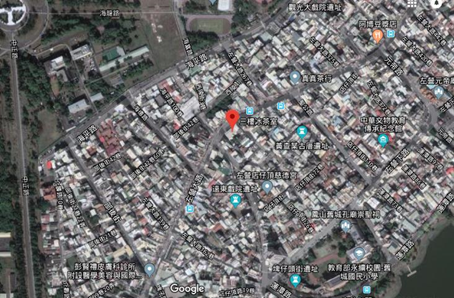
▲ Aerial view of Zuoying Avenue Third Floor; the dropped pin shows where the buildings are. (Source: Google Maps 2018)
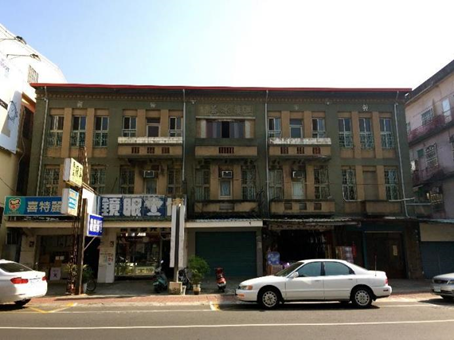
▲ Facade of the five connected three-story buildings of the Zuoying Avenue Third Floor. (Source: Concluding Report on the Investigation into Historical Sites Associated with the White Terror Period in Taiwan, National Human Rights Museum, 2015)
▲ Words advertising the Third Floor Iced Tea House on the side of the building: “All guests are welcome in our fine tea house which provides excellent services.” (Source: Concluding Report on the Investigation into Historical Sites Associated with the White Terror Period in Taiwan, National Human Rights Museum, 2015)
The terrifying “Third Floor”
The “Zuoying Avenue Third-Floor Iced Tea House,” the “Fongshan Guest House,” the “Navy Anti-Communist Pioneer Training Camp,” the “Marine Corps Training Unit” (Navy Disciplinary Team) and the “Detention Center of the Military Law Office under the Navy Command” were all used in 1949 as temporary units for the interrogation, detention and sentencing of navy officers and sailors arrested during the Navy White Terror Incident. The reason for their establishment were the Navy’s internal clean-ups.
During the internal purges of the 1949 Navy White Terror Incident, the “Third Floor” became known for the imprisonment and torture of political prisoners. According to victims Zeng Yaohua and Peter Faun, the detention center was a three-story high building; inside the first floor arcade were wooden-fenced cells; the rooms on the second floor were either empty or had bamboo beds; the torture chambers were in the basement. Zeng Yaohua said that before he was detained here in August 1949, everyone in the military knew of the existence of the “Third Floor.” In the Navy, those suspected of disloyalty would first be taken into custody and interrogated at the “Third-Floor Iced Tea House” for up to three days before being transferred to Fongshan Guest House (Mingde Villa in Fongshan) and forced to confess. Most of those sentenced to death were transported for execution to the Taoziyuan Execution Grounds, a place near the sea in Kaohsiung, while those tried and found innocent would still be sent to the Anti-Communist Pioneer Camps in Nantou and Yuanlin for ideological reform, deprived of their personal freedom. According to victims’ testimonies, the “Third Floor” was like a living hell, a torture site where caning, piteous crying and bleeding were common, and even sexual abuse and threats of torture occurred.