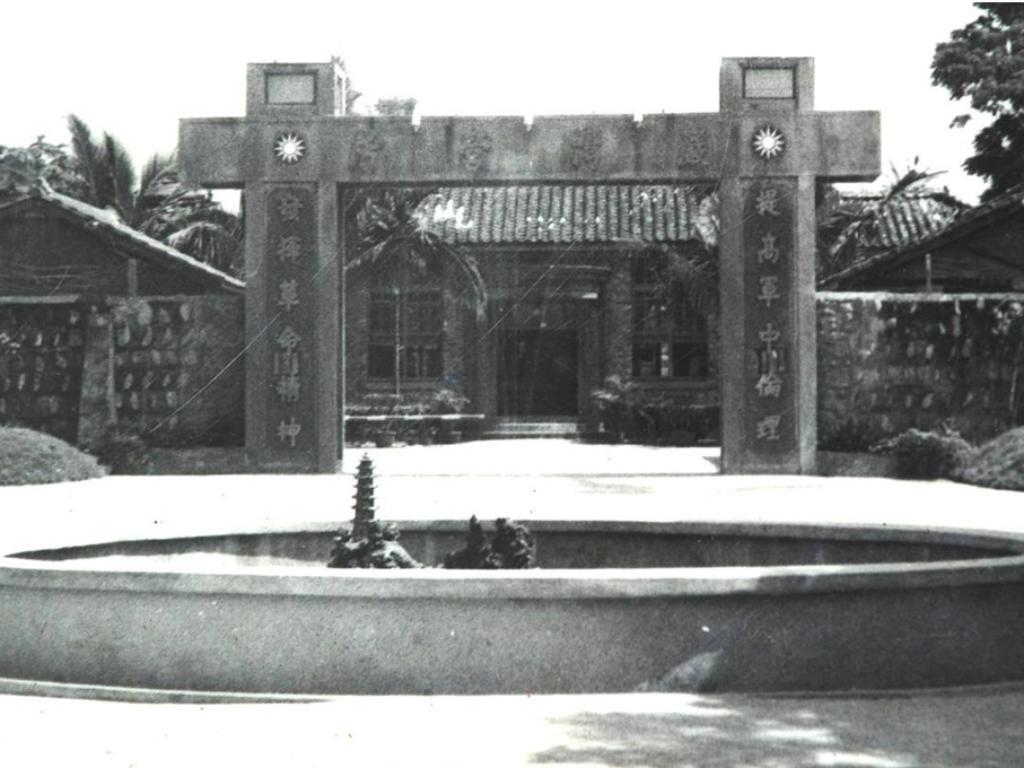







Taiyuan Prison in the 1960s
The Taiyuan Correctional Prison of the Ministry of National Defense, also known as Taiyuan Prison, was established between 1962 and 1972. The 8.7-hectare facility located on No. 32, Beiyuan Village, Donghe Township, Taitung County, was under the administration of Taiwan’s Ministry of National Defense, and it used to be a designated prison for people convicted of “sedition charges.” Because of the 1970 “Taiyuan Incident,” political prisoners were gradually transferred to the Oasis Village on Green Island. In 1973, the Taiwan Garrison Command took over the prison site and transformed it into the “3rd Division of the Taiwan Garrison Command Vocational Training Center and Taiyuan Vocational Training Center.” After martial law was lifted, the state saw the separation of military and judicial power. In 1988, the Ministry of Justice took over the site and refurbished it, renaming it as the “Taiwan Taiyuan Correctional Prison, Ministry of Justice.” In 1992, it was renamed “Taiyuan Skill Training Institute, Ministry of Justice.” In 2011, it was renamed the Taiyuan Skill Training Institute of the Agency of Corrections under the Ministry of Justice.
The Taiyuan Prison has undergone a series of renovations and upgrades since the Ministry of Justice took over its management, retaining very little of its original architecture. An account given by the political prisoner Wei Ting-chao gives an idea of the conditions at the time: cells had an area of roughly 23 square meters and had to house more than 20 prisoners each. Each prisoner only had a 30 centimeter by 180 centimeter floor space to sleep on. During heat waves, the prisoners could only use the toilet bowl as a simple washbasin to wash themselves and overcome the heat. Due to the lack of space in the prison cells, Taiyuan Prison used an outside labor system, in which prisoners who served sentences of certain lengths had the chance to perform labor tasks within a radius of 13 hectares outside the prison compound. They worked as workers at auto mechanic workshops and water pumping stations, and also as farmers on agricultural crews, orchards and pig farms. Under the open prison system there were also 50 to 60 prisoners assigned to jobs within the prison compound. These included cooking, cleaning, hanging the laundry and hairdressing. Compared to other prisons, security at Taiyuan Prison was relatively lenient. Besides having the opportunity to be part of the prison camp system, prisoners also had the right to elect their own kitchen committee and have a say over their food. The prison also held movie screenings every Friday.
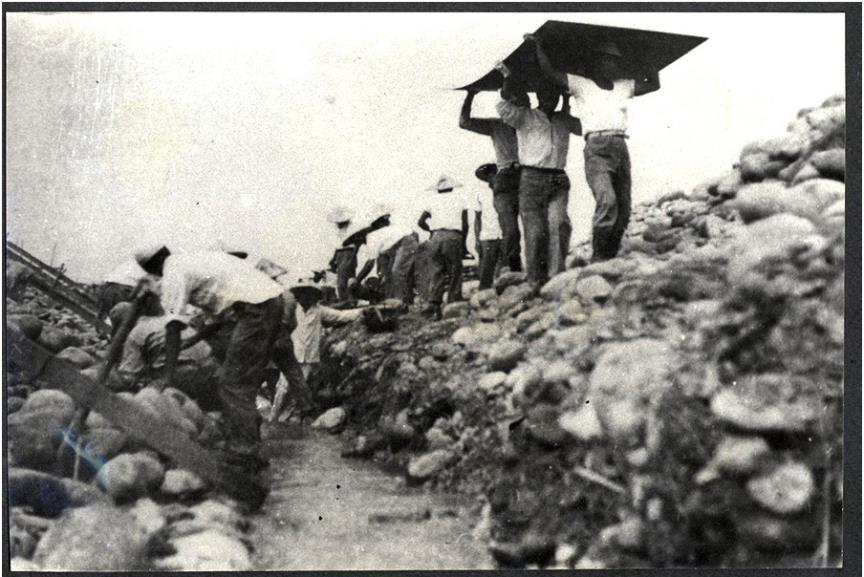
▲ Prisoners involved in construction work in the early days of the Taiyuan Correctional Prison. (Source: Taiyuan Skill Training Institute, Agency of Corrections, Ministry of Justice)
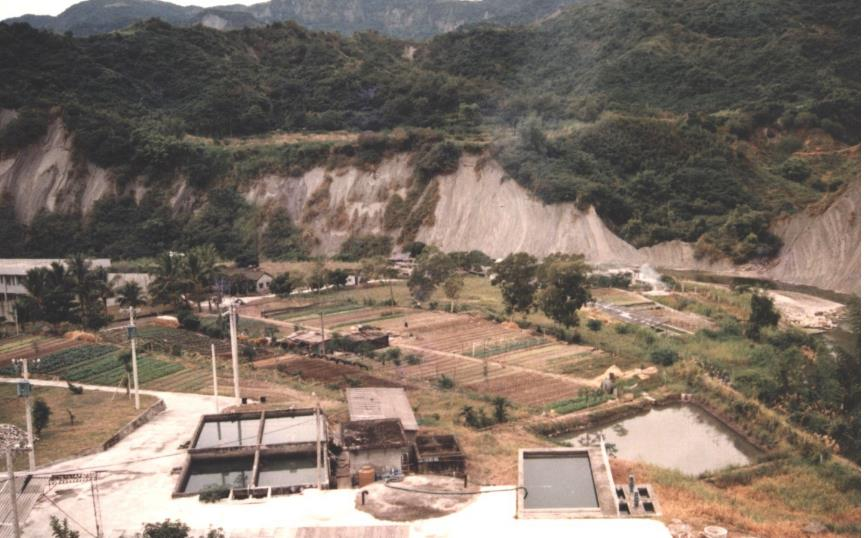
▲ Land is being cleared around Taiyuan Prison for agricultural purposes. (Source: Taiyuan Skill Training Institute, Agency of Corrections, Ministry of Justice)
“Taiwan has gained independence. Hand over your guns”: the Taiyuan Incident
On May 31, 2014, a “Taiyuan Incident Commemorative Plaque” was installed in the Taiwan Holy Mountain Ecological Education Park in Caotun Township, Nantou County (the words on the plaque were written by Chen Yi-shen). The plaque tells the story of the 1970 Taiyuan Incident in detail, how prisoners planned and carried out a revolt in the prison to fight for the independence of Taiwan. During the oppressive rule under martial law in 1970, Peng Ming-min penned a manifesto advocating democracy in Taiwan and was sentenced to jail, but he managed to escape overseas. Hearing about this, six political prisoners in Taitung’s “Taiyuan Correctional Prison, Ministry of National Defense,” Chiang Ping-hsing, Cheng Chin-ho, Cheng Cheng-cheng, Chen Liang, Chan Tien-tseng and Hsieh Tung-jung, staged a revolt. February 8 was the third day of the Lunar New Year, and the guards were not on high alert that day. The rebels seized firearms from the guards who were changing shifts, with Chiang Ping-hsing crying out: “Taiwan has gained independence. Hand over your guns now!” However, their failure to kill a master sergeant proved to be fatal to their cause, as their plan to take over the radio station and to rally church groups and youths fell through. The six young men fled to the mountains and were captured over the next two weeks. Five of them were executed by firing squad on May 30.
Even though the uprising failed, the Taiyuan Incident still remains an example of a revolt that had been thoroughly planned and politically driven. It is a testimony to the statement, “where there is oppression, there will be resistance.” The Taiyuan Incident also led the government to decide to build the Oasis Village on Green Island, where political prisoners were later transferred to.
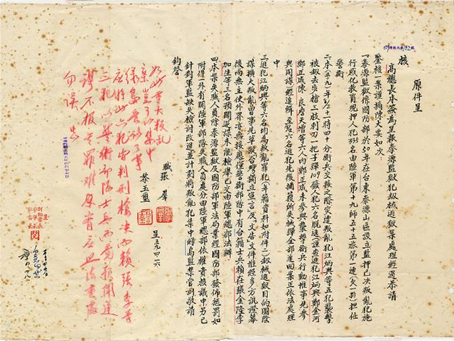
▲ Report of the Taiyuan Incident submitted to President Chiang Kai-shek. Details on how the Taiyuan prisoners seized firearms and escaped the prison as well as how they were dealt with subsequently were included. The red text was written by Chiang Kai-shek approving the execution by firing squad. (Source: Wikipedia)
The “Taiyuan Zone” in Taiwan Literature
The so-called “Taiyuan Zone” refers to the underground literary circle in Taiyuan Prison. Taiyuan Prison produced many “anonymous” authors due to the lenient supervision, the prevalence of reading and writing activities in the prison, as well as access to publication channels beyond the prison (in particular Tong Chang, the editor-in-chief of the Taiwan Shin Sheng Daily News supplement, offered encouragement and financial support). At its peak, the amount of revenue generated from these published essays amounted to NT$250,000 per month. However, due to the restrictions imposed by the prison, most of the writings and translations were on non-political topics such as healthcare, beauty, medicine, tourism and literature. These “prisoner-writers,” which included Wang Yanjin, Wu Zhongling, Lu Zhaolin, Kuo Chen-chun, Kao Chin-lang, Xi Changan, Sun Yicang and Chen Changkun, were a unique phenomenon in the history of the White Terror.