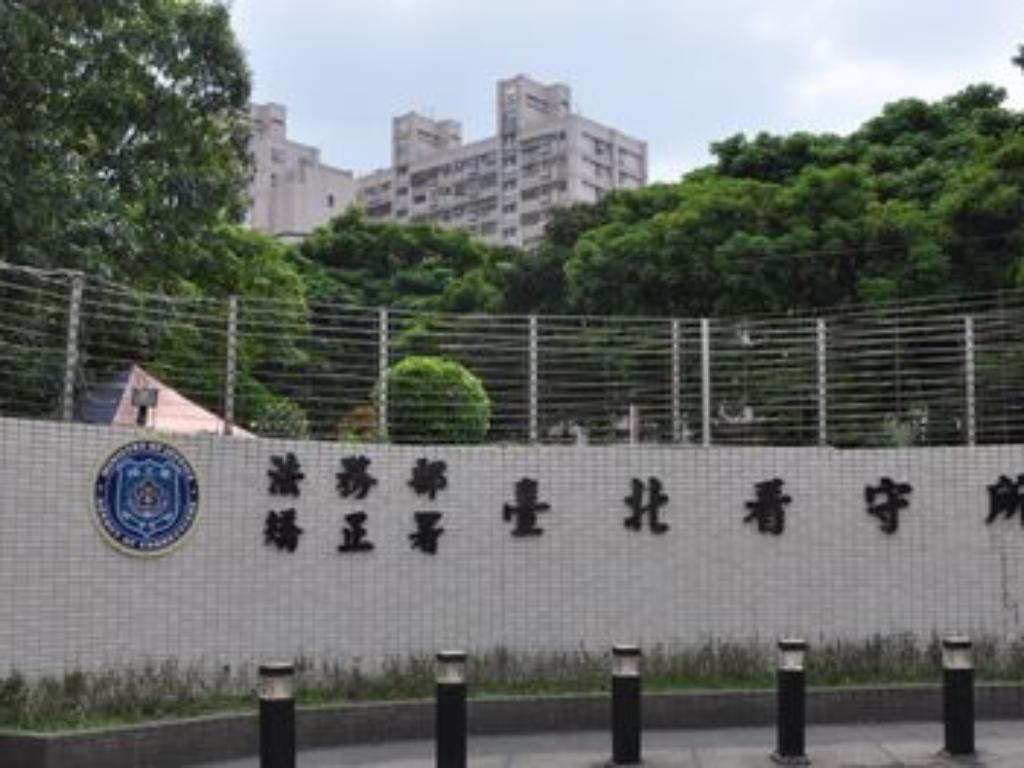








A prison within a prison: “Cheng Prison”
Cheng Prison, under the purview of the Investigation Bureau, was a secret prison known as a “prison within a prison” inside the Detention Center of the Taipei District Court, sharing the same address: first registered at No. 1, Aiguo East Road, Taipei City and later relocated in 1975 to its current address at No. 2, Lide Road, Tucheng District, New Taipei City. When exactly Cheng Prison was established and disbanded within the detention center remains unknown, but it cannot have been established later than the late 1960s. Although Cheng Prison operated “parasitically” within the Taipei Detention Center, all its management members were enlisted staff of the Investigation Bureau and the detainees were mostly investigators suspected of violating the law. In other words, Cheng Prison was an illegal secret prison where the Investigation Bureau detained and investigated “its own people.”
According to the oral interview account of Mr. CC (pseudonym of a teacher at Dali High School), he was arrested in October 1969 by the Taichung Investigation Station of the Investigation Bureau and transferred to “an old prison on Taipei’s Aiguo East Road” for interrogation sessions day and night. The prison he refers to is Cheng Prison, which is also mentioned by Fan Li-da in “The Wu Tung-ming Files” as cited below:
There was a small prison within the Taipei Detention Center, known as “Cheng Prison.” Inmates housed in this prison were special agents who had committed disciplinary offenses or unlawful acts. However, before they were imprisoned, none of them had received proper trials or prosecutions. After having fully served their sentences, their criminal records were wiped clean. Although Cheng Prison was within the Taipei Detention Center, all prison guards and management workers were sent out by the Investigation Bureau. Because of that, the detention center staff often joked about “Cheng Prison” being a “foreign concession” inaccessible to outsiders.
This shows that the Cheng Prison was by no means an ordinary prison, but a prison that operated illegally.
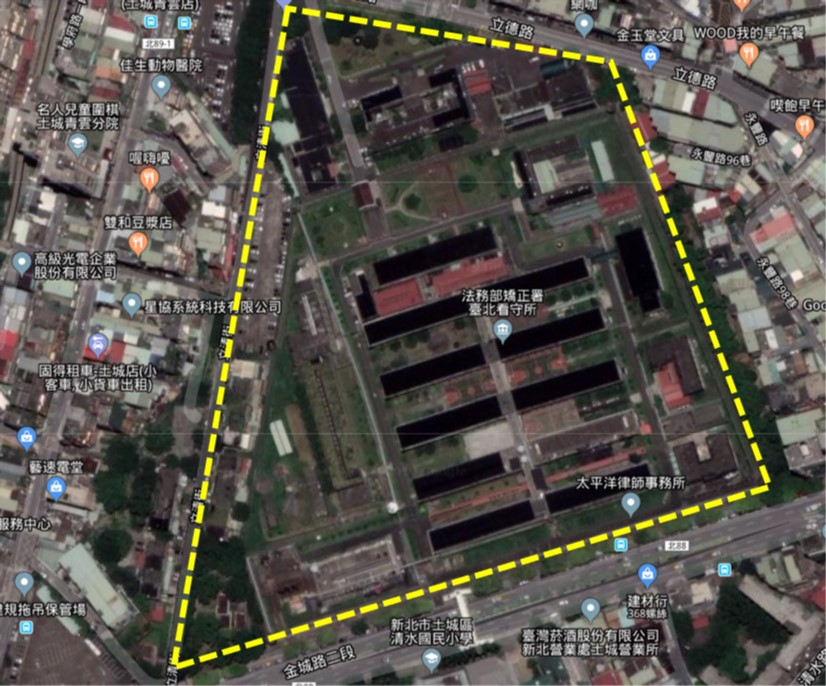
▲ The Taipei Detention Center was relocated to Tucheng District in the 1970s. The block framed by the yellow dotted-line shows the area where the detention center was once situated. (Source: Google Maps; frame lines added.)
Indistinct boundaries between the intelligence apparatus and the prosecutorial system during the period of martial law
According to a report dated May 1977 by Investigation Bureau officer Kao Ming-hui, both Cheng Prison and the Ankang Reception House were investigation units under the Investigation Bureau. He wrote:
Although the Investigation Bureau has handled plenty of cases, […] the absolute majority of subordinate units of the Bureau were simply handling cases involving participation in the Communist party decades ago. […] Cheng Prison today, and the Ankang [Reception] House tomorrow, everyone seems to be occupied with endless investigations. […] However, how on earth could it benefit our work? What exact contributions could it possibly make to the party-state? Very few would ponder over such questions, though.
This secret prison, which should have been subject to the intelligence system, was secretly hidden along with its investigation rooms (and detention prison) within the Taipei Detention Center, in order to evade the established charging procedures of the investigation system. Agents of the Investigation Bureau or political criminals would first be “rinsed” (temporarily detained) in other detention rooms of the Investigation Bureau before being sent to Cheng Prison for substantive investigation. By doing so a facade could be created that the provision prescribing that “suspects shall be referred to the judicial court within 24 hours” was being adhered to.
Cheng Prison, despite being an internal prison, also jailed political criminals who were being tortured by the Investigation Bureau. One common method of torture was the “fatiguing investigation”: not only were the prisoners forbidden from sleeping and drinking water, they were also exposed to blinding lights. Many political survivors under illegal detention during the 1970s recalled that they were actually jailed in the “Ren Prison” (one of the eight prisons within the Taipei Detention Center). According Wu Junhong who was detained in Ren Prison, “Cheng Prison” was just a code name, the real name was “Ren Prison.”