





A military prison in both the Japanese and postwar eras
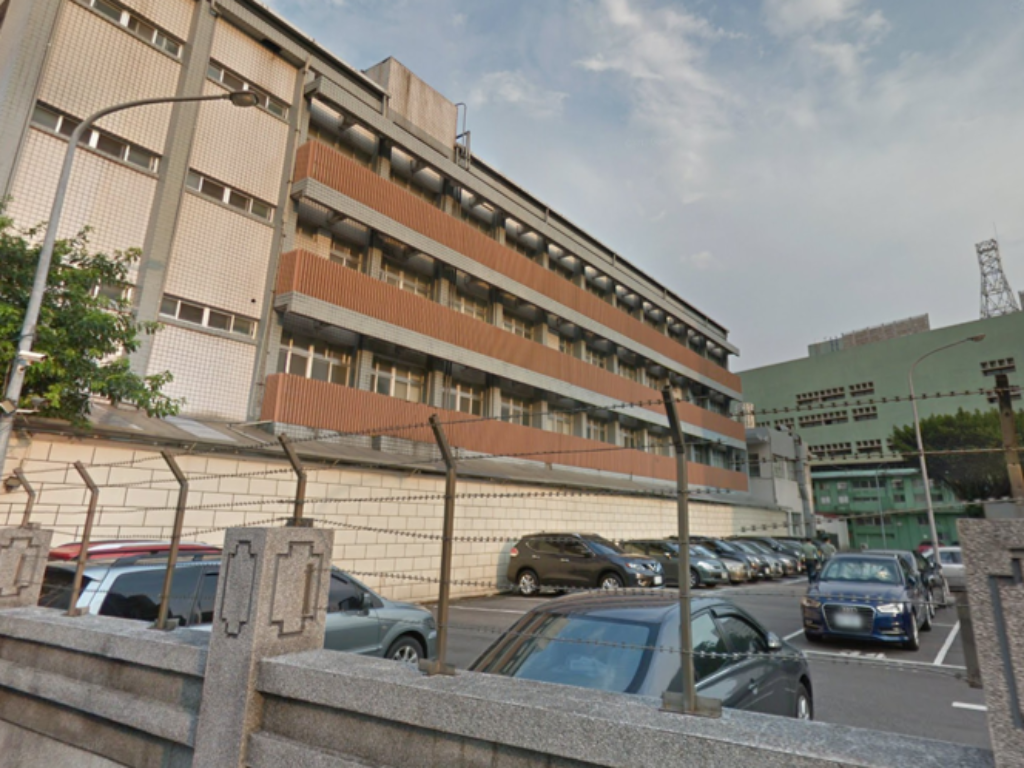
The Secrets Bureau South Branch, or South Branch for short, was a subordinate body of the Secrets Bureau under the Ministry of National Defense. Its official name and when exactly it was founded and disbanded remain unknown. Once situated at today’s Lane 133, Yanping South Road, Taipei City (within the precincts of the Taiwan Garrison Command, adjacent to the rear entrance), the South Branch used to occupy an area between today’s Downtown Section of Soochow University and the Armed Forces Reserve Command of the Ministry of National Defense. It was approximately during the first half of the 1950s when the South Branch began to be used as a prison to house political criminals.
On the original site of the South Branch stood the “Garrison Prison of the Taiwan Army of Japan Headquarters” during Japanese rule, whose location can be identified on aerial reconnaissance maps photographed by the US Air Force between 1944 and 1945. After World War II the prison was taken over by the Secrets Bureau and the Armored Brigade. Part of it was converted into a political prison, and the remaining part, after being taken over by the Armored Brigade, was used as the construction site where Chiang-Shi Jingyi (wife of Chiang Wei-kuo, former Chief of General Staff of the Armor Training Command) established the Chingshin Kindergarten in 1951 (at today’s No. 58, Section 1, Guiyang Street, Taipei City). This kindergarten was set up to enroll the children of officers and soldiers of the armored forces, and was later expanded into the Chingshin Elementary School (which was relocated in 1976 to its current address on Xinglong Road).
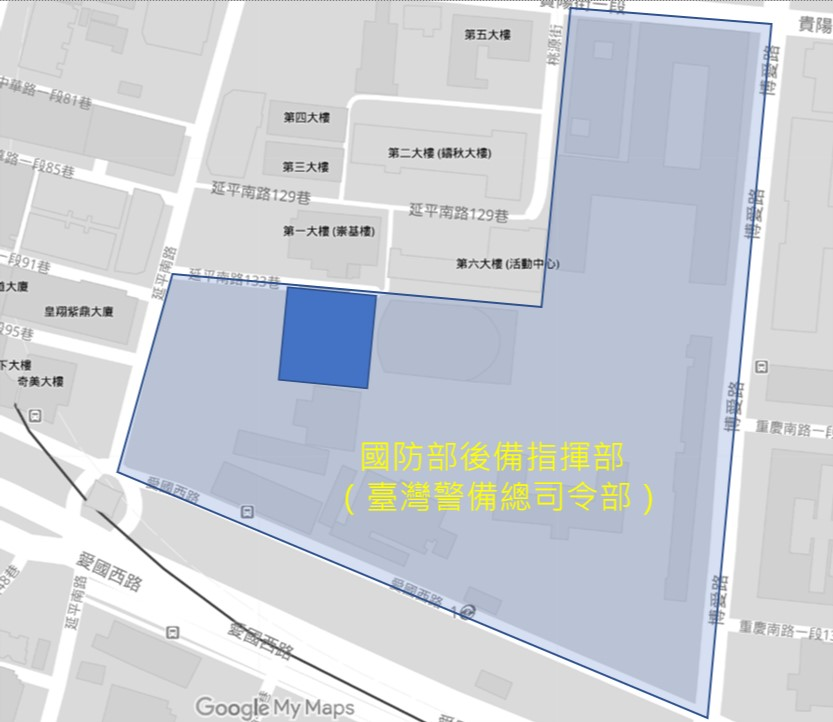
▲ The blue-framed gray block shows the Taiwan Garrison Command. The navy-blue-colored block shows the area where the South Branch might have been located. (Source: Google Maps; frame lines and colored blocks added.)
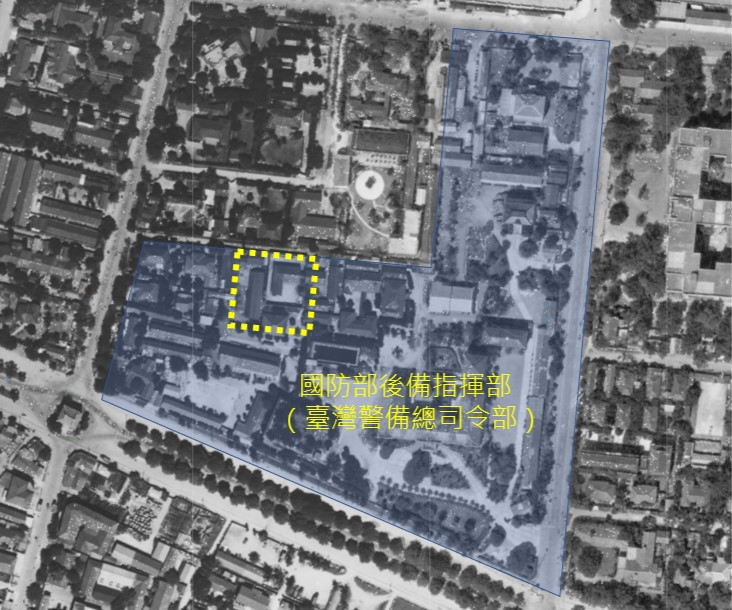
▲ Aerial photograph taken in 1957. The block framed by the yellow dotted-line shows the area where the South Branch might have been located. (Source: Center for GIS, RCHSS, Academia Sinica (2018). “Taiwan Historical Maps in the Last One Hundred Years.” Available at: http://gissrv4.sinica.edu.tw/gis/twhgis/ ; frame lines and colored blocks added.
The South Branch: a brutal prison replete with inhuman tortures
The South Branch was a two-story reinforced-concrete building with one underground level, comprising approximately 20 cells. There was a central hallway in the building with long-narrow cells on its two sides. Each cell’s three walls were cement-made, but the tiger-head front door, the ground floor and the ceiling were made of wood. In the back wall there was a small window with iron bars. The tiger-head front door was merely 1.5 meters in height, so the inmates were forced to lower their heads to enter and exit the cell. At the lower part of the door was a tiny hole for delivering meals. On the wall beside the door was an observation hole through which jailers could keep a watchful eye on the inmates. A small light bulb was hung in the center of the ceiling. The size of said cells was about 3.7 to 7.4 square meters, designed to house 20 to 30 prisoners, making the interior space extremely hot and humid. Inmates were forced to take turns standing rigidly, sleeping in a sitting position or sitting up against the walls. An overwhelming stench of sweat, bodily odors, urine and feces filled up the cells, seriously threatening the prisoners’ mental health. The main food provided at the South Branch was usually congee served with a dozen peanuts, while sometimes replaced by steamed bread and soybean milk served with gourd soup or water spinach, leaving most of the inmates malnourished.
The overcrowded South Branch was infamous for torturing its prisoners to produce false evidence for criminal charges, like a “living hell.” Intelligence officer Ku Cheng-wen’s testimony can serve as an example:
Huang Tien was dragged into the empty room behind the director’s office. In an instant, one could only hear unbearably brutal beating and screaming coming from inside. Fifteen minutes later, Huang Tien was escorted back to the investigation room, lying barely alive on the table, with bloody fluids dripping from his hair, eyes, nostrils and mouth. His body was trembling like a leaf.
Where the South Branch used to be looks totally different now from how it did many years ago. Land ownership is shared by the Taipei City Government and individuals. A social-welfare building is currently under construction on the government-owned land.